

Discover the Creativity of the Future: Use 3D Printing to Bring Your Ideas to Life
Suite 20-01 & 20-02B, Level 20 The Pinnacle, Persiaran Lagoon, Bandar Sunway, 47500 Subang Jaya, Selangor, Malaysia
hello@custommetal3dprinting.com
+60 124838830
Silicone is a synthetic rubber with several desirable characteristics for manufacturing. The versatility of its chemistry allows its chemical formulation to be tailored to an extensive range of applications from seals and joints to wearable electronics, medical devices, robotic grippers, cookware, and thermal/electrical insulation.
Table of Contents:
Silicone 3D Printing has become increasingly important in modern manufacturing as industries explore flexible and durable material solutions.
Most silicone products are fabricated via injection molding, compression molding, and casting. With the recent rise of 3D printing technologies, the question that emerges is whether it is possible to 3D print silicone parts, and, if so, what are the available processes and alternatives?
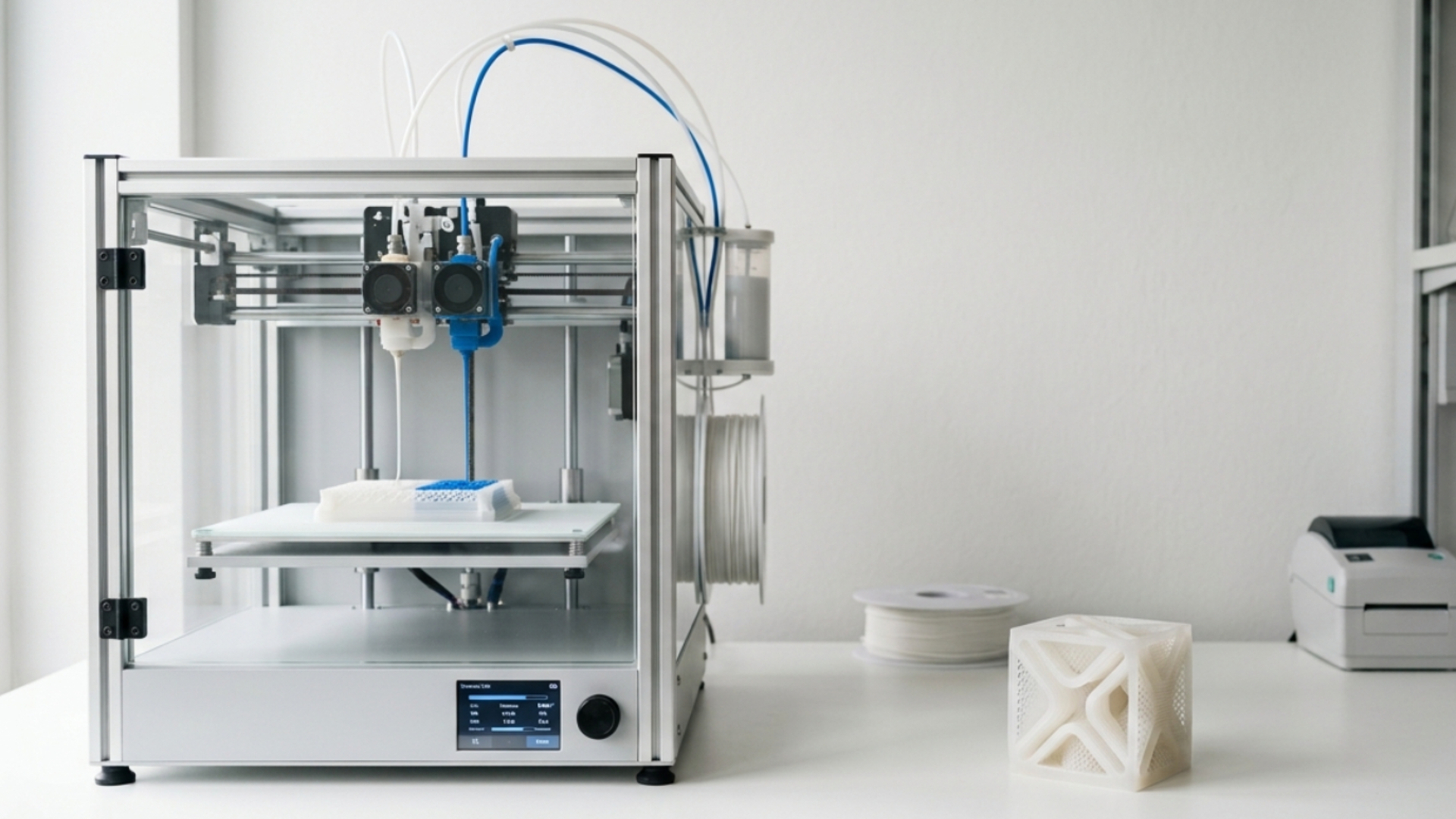
Professional manufacturers now offer a Silicone 3D Printing Service to help industries develop custom elastomer-based components more efficiently.
Silicone is a challenging material to 3D print due to its high viscosity and it cannot be simply extruded and cured by heating or UV exposure as is the case with many photopolymer resins. However, there is a variety of 3D printing solutions that utilize materials with silicone-like properties, as well as silicone casting and molding using 3D printed molds, giving access to many of the benefits that silicone manufacturing can provide.
One such approach is Silicone Mold 3D Printing, which allows manufacturers to create precise molds for silicone casting applications.
In this guide, you will learn about the different options for 3D printing silicone materials, alternatives, and how additive manufacturing can complement traditional silicone manufacturing processes.
Silicone printers, and their alternatives can be broadly grouped into the following categories:
3D Printing for Silicone Masks is widely used in entertainment and medical industries to produce highly detailed and realistic facial prosthetics.
Although many 3D printing technologies have existed for several decades, printing with silicone, in particular, has remained a challenging endeavor until recent years due to intricacies of the material. While some companies have released various silicone 3D printing solutions over the last couple of years, all of them had significant limitations, such as exceedingly high costs (often hundreds of thousands of USD), low resolution, or limited material properties.
However, in 2023, Formlabs announced release of Silicone 40A Resin, the first accessible 3D printing material that enables designers and engineers to 3D print 100% pure silicone parts with excellent mechanical properties and functional characteristics.
By utilizing the innovative Pure Silicone Technology™, this product combines the best properties of traditional cast silicone and 3D printing, being available as an affordable (starting from 3,499 USD) part of Form 4 SLA 3D printing platform and providing high-performance functional parts in several hours.
Silicone 40A Resin parts exhibit 40A shore durometer, 230% elongation at break, and 12 kN/m tear strength. They can be utilized for applications that require a combination of the pliancy, stretchiness, and resilience even through repeated flexing, stretching, or compression. Additionally, parts 3D printed in Silicone 40A Resin possess 34% rebound resilience, excellent chemical and thermal resistance (temperatures from -25C to +125C), and intricate detail as small as 0.3 mm and complex shapes that are often unavailable to conventional manufacturing methods.
Direct silicone 3D printing with Silicone 40A Resin is appropriate for a wide variety of applications, varying from rapid prototyping and manufacturing aids to molds and low-volume production.
Silicone 40A Resin parts are suitable for the following applications:
FINIS used 3D printed silicone gaskets and buttons to make functional prototypes of their new smart goggles.
This product development team at FINIS, Inc. was able to 3D print swimming goggle gaskets similar to production grade within eight hours for just $10 per piece compared to more than $1,000 and a three-week wait for a urethane casting. The 3D printed silicone gaskets went through a variety of water tightness testing within a swimming pool environment, thus shortening the product development timeline dramatically.
Custom gaskets from Dorman Products 3D printed in Silicone 40A Resin.
Dorman Products is a century-old manufacturer of aftermarket automotive parts that turns to silicone 3D printing to produce custom gaskets for pressure testing of new products. They could not cut the gaskets from metal dies using an arbor press as they did previously, as the new products required more complex solutions. The switch to 3D printing silicone allowed them to reduce the lead time and costs significantly, especially as they needed to test hundreds of new parts.
Connectors seals from HGM Automotive Electronics 3D printed with Silicone 40A Resin.
HGM Automotive Electronics is a specialty transmission controller manufacturer, which has been using injection molding to make silicone parts for their products, which are exposed to various chemicals and physical stresses. They have evaluated silicone parts 3D printed in Silicone 40A Resin and found that their mechanical properties and chemical resistance were comparable to conventionally injection molded silicones. Thus, after six weeks of thermal cycling testing in an engine bay under normal operating conditions and additional chemical fluid exposure testing, their team has authorized the use of 3D printed Silicone 40A Resin parts for end-use automotive parts.
Many reasons explain the appeal of silicones for manufacturers, among which the elasticity and flexibility that they provide stand out. Those properties allow for a significant number of diverse applications, which are difficult to reach with other materials.
The Shore hardness of silicones typically varies between 10A and 80A. Several major conventional 3D printing processes allow for selecting materials within that range and possessing additional desirable characteristics, such as durability, temperature, and UV resistance, biocompatibility, food safety, and color, translucence, among others.
FDM Alternatives to Silicone :
When it comes to FDM printing, thermoplastic polyurethane (TPU) and thermoplastic elastomers (TPE) are the most flexible materials, capable of offering an adequate substitute for silicone.
SLA Alternatives to Silicone :
SLA 3D printing is a very popular choice among professionals who value precision and a wide variety of materials offered by the technology.
SLS Alternatives to Silicone :
Selective laser sintering is the most common industrial 3D printing technology that offers high accuracy and throughput.
For many applications, 3D printing opens the possibility to fabricate pure silicone parts with unique properties.
Traditional methods of injection molding, thermoforming, compression molding, and silicone casting all rely on molds to form the final part.
A professional Silicone 3D Printing Service helps bridge the gap between traditional manufacturing and modern additive production methods. Get a consultation with us today.
