3D Silicone Printing: How It Works & Ideal Applications

Silicone Mold 3D Printing provides greater flexibility in production while complementing traditional manufacturing techniques such as injection moulding, compression moulding, and casting.

3D Silicone Printing: How It Works And Ideal Applications

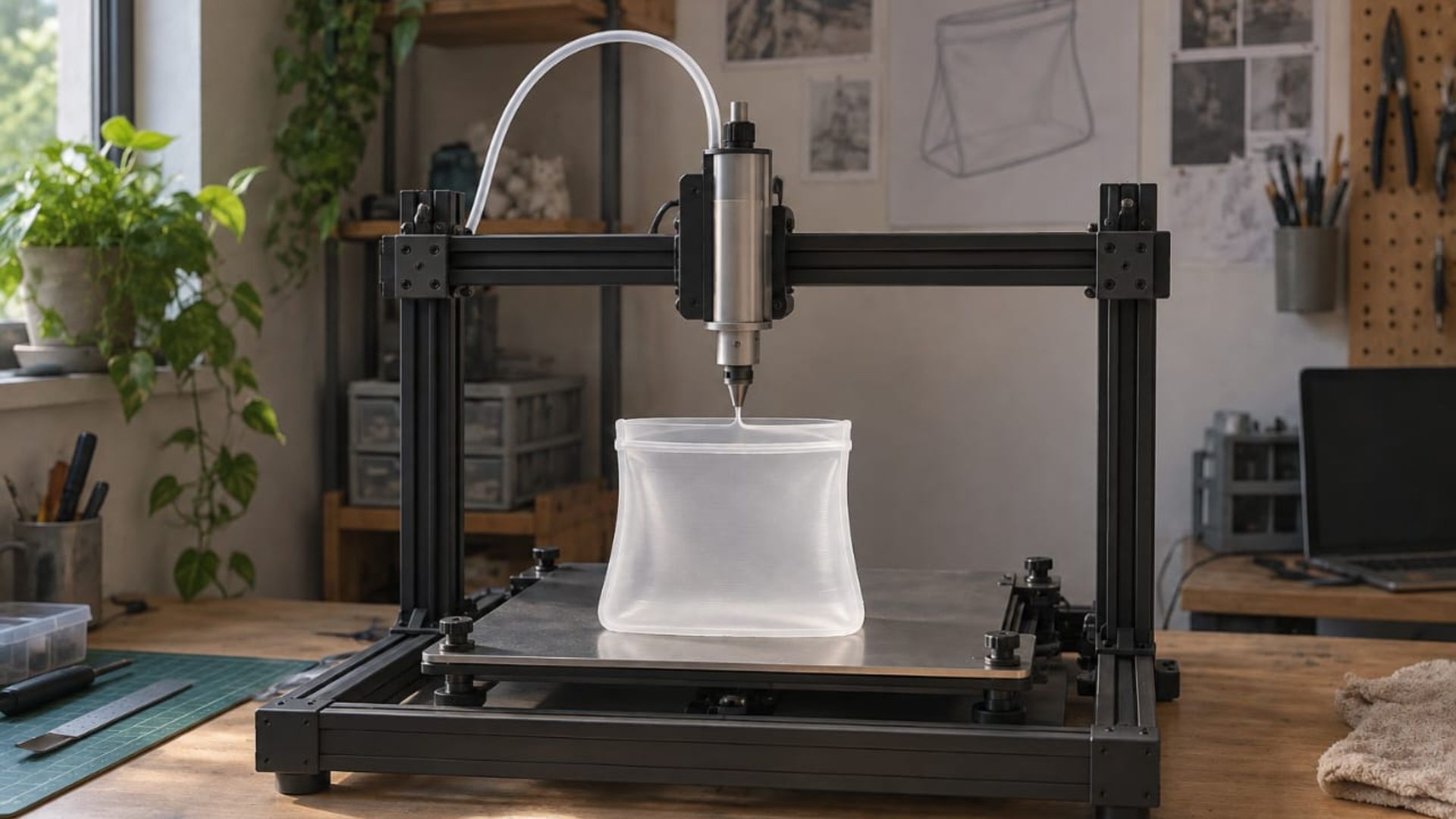
3D Printing in Silicone offers new possibilities for production compared and in addition to more traditional methods like injection moulding, compression moulding and casting. Despite the potential, silicone’s use in additive manufacturing remains limited due to its extremely high viscosity that is virtually impossible to control out of a nozzle. This leads to flow issues in standard 3D printers designed to extrude plastic. In other words, accuracy is compromised.

3D Printing And Silicone – How It Works

Although print materials such as TPU and TPE have some silicone-like properties, neither of them are quite as soft and flexible as silicone. 3D printing’s main problem with silicone is the high viscosity of the liquid, which in a liquid form would be flowing out of a standard nozzle as single cream.The liquid pumps provide nozzles with material, which superimposes on itself, not collapsing on the print bed.In essence, this is a form of thermosetting with an elastomeric behaviour, but for silicones and with a 3D printer.It is important to note that silicone 3D printing is a new thing, and the number of 3D printers out there is sparse at best.

Silicone 3D Printing Applications

Silicone is prevalent in manufacturing as a plastic and rubber replacement, with its elasticity and flexibility empowering countless applications.3D printing provides a solution for rapid prototyping, and small series production runs to complement injection moulding and casting. It is not a replacement for these processes, but a complementary technology suited to different things.The applications potential depends on the fact that you are printing one or two-part silicone and soft or hard silicone formulations. Where silicone 3D printing really comes into its own is producing intricate geometries, forms and shapes, especially when moulds and casts are too time-consuming and complex to produce, saving you both time and money. Soft silicones are suited to:
  • Non-marring grippers.
  • Print in place soft components.
  • Vibration and shock dampers.
  • Springs and bushes.
  • Seals, gaskets, boots and plugs.
Hard silicones are suited to:
  • Abrasion-resistant coverings.
  • Snap-fit connectors and sleeves.
  • Impact-rated casings.
  • Vibration-isolated parts.
  • Connectors and jigs and fixtures.

3D Printing Using Materials With Silicone-like Properties

If you don’t have a specialised silicone 3D printer, you can produce soft, flexible and elastic parts and models using a standard FFF or SLA printer. For FFF, thermoplastic polyurethane (TPU) mimics the performance, look and feel of soft and hard silicones. Examples include the semi-rigid, high-durometer Essentium TPU 74D, and the flexible Essentium TPU 80A, which mimics soft silicone.

For SLA with Formlabs, Elastic 50A Resin is a silicone substitute with similar properties as soft silicone, while Flexible 80A Resin is slightly stiffer, as hard silicone. This makes 3D Printings Silicone Molds, Silicone Mold 3D Printing, and 3D Printing for Silicone Masks possible considerations when selecting suitable silicone-like materials and production methods. Contact us right away.