

Discover the Creativity of the Future: Use 3D Printing to Bring Your Ideas to Life
Suite 20-01 & 20-02B, Level 20 The Pinnacle, Persiaran Lagoon, Bandar Sunway, 47500 Subang Jaya, Selangor, Malaysia
hello@custommetal3dprinting.com
+60 124838830
Metal casting is an ancient metalworking technology in which metal is melted and poured into a mold where it is allowed to cool and harden to produce metal parts of desired shape and size. Despite its age, metal casting remains one of the most preferred methods in the contemporary industrial manufacturing of metal parts.
In this article, the metal casting process and the benefits of using modern technologies, such as 3D printing, in combination with traditional metal casting approaches for the production of metal parts will be discussed.
Table of Contents:
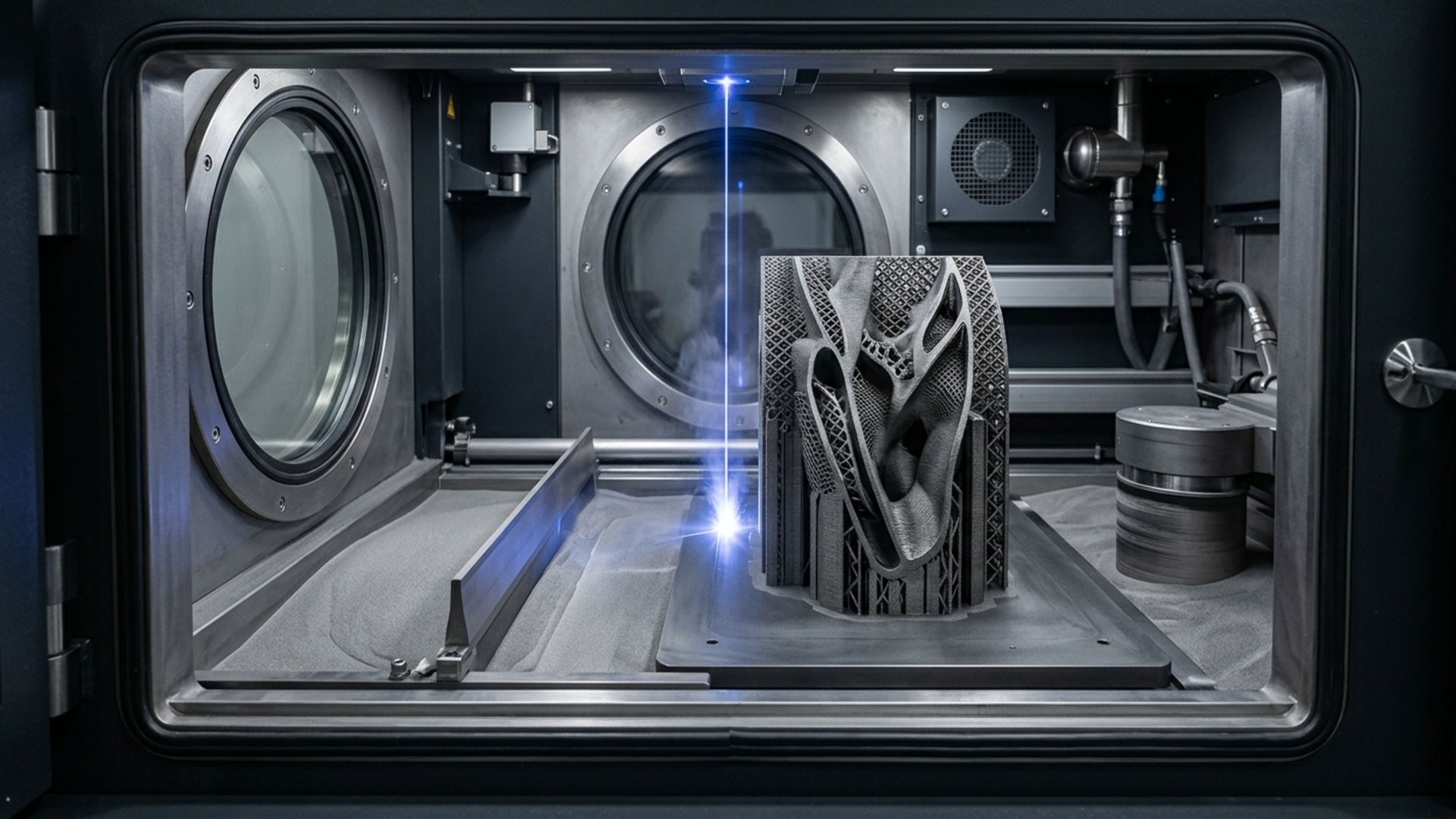
Since its invention, metal casting underwent numerous transformations; however, its essential principles have remained the same. Below are the general steps involved in the metal casting process:
To begin the metal casting process, a manufacturer should create a pattern that will serve as a mold for the obtained castings. Traditionally, the metal casting pattern is made from wood, foam, plastic, or wax. The pattern is then placed in a mold, from which the metal part is later retrieved. Nowadays, 3D printing allows designers to digitally design the pattern directly in CAD software and Metal Resin 3D Printing can be used to produce it with high accuracy.
A pattern is not an image of the desired part; it includes additional elements required for the molding process, such as gates and vents, and has a larger size to compensate for the metal shrinkage after cooling. If a metal casting is hollow, a manufacturer also needs to make a core, another type of pattern used for shaping a core of the future metal part. Apart from being larger than the expected part, a pattern also allows it to cool down sufficiently.
Using patterns, a manufacturer proceeds to the second step of the metal casting process – mold making. The molds are divided into expendable and non-expendable, and their production method depends on the type of the mold. Expendable molds are made from sand, plaster, wax, or produced with the use of 3D printing and are destroyed in the process of casting. Non-expendable molds are made from metal and can be used multiple times.
The third stage of metal casting is melting and pouring the metal. Using special machines, a manufacturer heats the metal until it reaches a liquid state. The metal can be cast in various forms, such as iron, aluminum, copper, steel, zinc alloy, gold, and silver. When the metal is in a liquid state, the molten material is poured into the prepared mold where it is allowed to cool and harden.
After the metal has been sufficiently cooled and turned into a solid state, it can be retrieved from the mold. Depending on the mold type, it can be shaken off the part with a shakeout machine, rinsed, or released with ejection pins. Next, a manufacturer needs to remove unwanted metal parts, known as gates, feeders, and vents. After that, the obtained casting is processed with filing, grinding, machining, or sandblasting to remove rough surfaces and achieve an accurate shape and desired size.
Although the general idea of metal casting remains the same, the specific techniques vary. Different techniques have emerged to meet the requirements of specific industries. Among the most common metal casting methods are die casting, investment casting, and sand casting.
According to buhlergroup.com , die casting is a metalworking technique in which molten metal is forcibly injected into a mold cavity at high pressure to produce metal parts of complex shape. In die casting, the mold is held together by a die casting machine that holds two halves of a mold, and the metal is injected into the mold through a nozzle. When the molten metal has hardened, the mold is opened to release the casting, and ejector pins push the metal part out of the mold.
There are two main die casting techniques – hot-chamber and cold-chamber casting. Depending on the melting point of the metal to be cast, a manufacturer chooses a die casting type.
Hot-chamber die casting is the most common method, especially for relatively low-melting metals such as lead, tin, zinc, copper, and magnesium. Hot-chamber die casting machines have built-in furnaces where the metal is melted. When the metal is sufficiently heated, the machine’s plunger advances to charge it into the casting die. The gooseneck shape allows the hot metal to charge the chamber until it reaches the mold with a piston.
The direct contact of the chamber with the molten metal allows the hot-chamber casting process to occur rapidly. Because of the high pressure and temperature, the machines that use the hot-chamber casting technique are prone to corrosion. Therefore, the hot-chamber technique is less preferred for metals with a high melting point that require high pressure to cast.
Different from the hot-chamber casting, in cold-chamber die casting, the metal is poured into the machine manually. A machine with a piston then forces the metal into a stationary mold, which separates after the metal has cooled down. Thus, the cold-chamber technique allows for avoiding corrosion and is preferred to use with metals with an extremely high melting point, such as aluminum and aluminum alloy.
Die casting is a fast process that allows to create complex metal parts with high precision. It is suitable for mass production of parts and creates parts that are both tough and smooth. Hence, it is a key manufacturing process for the global automotive industry, the aerospace industry, and the mass production of metal parts, including Metal 3D Printing Automotive applications.
Die casting requires expensive machinery that makes it a difficult option for low-volume production. The metal that can be cast using the die casting techniques is also limited. Moreover, the plasticity of the metal influences the complexity of the final product.
Investment casting , or lost-wax process, is a metal fabrication process in which the pattern is surrounded by a wax coating, and ceramic shell is formed around it. Investment casting is one of the oldest methods of metalworking that produces metal parts with exceptional precision. It is one of the preferred methods of metal casting for jewelry, dentistry and other fields that require intricate detail and precision. It is widely used in the industrial field to produce precise parts and prototypes.
Investment casting patterns are made from wax, plastic, or 3D printed materials, and the pattern is assembled into a sprue tree, which is surrounded by a layer of liquid investment plaster. The investment material is baked in a special oven to form a shell. Then the wax pattern, as well as the sprue tree, is melted, leaving an empty space in the shape of the pattern. Molten metal is poured into the empty space, filling it with the help of gravity or vacuum pressure. After the metal has cooled down, the casted metal piece is filed and grinded to obtain desired shape and size.
Clear Cast Resin 3D printing can be used to produce wax patterns for investment casting, such as jewelry, sculptures, dental prostheses, and other metal parts. Depending on the wax pattern, different resins can be used, including Clear Cast Resin for wax patterns over 3 mm in height, Castable Wax Resin for light-weight wax patterns, Castable Wax 40 Resin 3D printing to cast medium-weight jewelry, and True Cast Resin 3D printing for wax patterns, requiring a higher thickness and engineering parts.
Investment casting is a very flexible process with high precision. It allows to manufacture accurate and consistent parts of all metals, which can be cast, including those parts with complex geometry that other techniques are unable to produce. It also allows high surface finish, minimal machining and low tolerance.
These advantages make investment casting suitable for manufacturing metal parts of the automotive, aerospace, and industrial equipment, medical devices, jewelry, and sculptures.
Investment casting is a labor-intensive and challenging technology that requires experienced workers, specialized equipment, and expendable molds. Since investment casting requires many labor-intensive steps, it is usually not suitable for small parts. It is difficult to apply investment casting to manufacture parts with cores.
Sand casting is the oldest metal casting method that is still used today. It is the most simple and cost-effective method of metal casting that allows produce metal parts without special machining.
Sand casting process involves a number of steps, starting from pattern making to cleaning the sand casting. In sand casting, a pattern is first created, usually from wood or plastic, and the size of the pattern is determined by the size of the future metal part. Patterns of complex shape, requiring detail on one side and being simple of the other side can be made in an open sand mold. The sand casting mold is composed of different elements, including a cope (the top half of the mold), a drag (the bottom half of the mold), a flask (a box-shaped mold that holds the sand), a sprue (a channel for hot metal to flow into the mold), and a gate (an opening in the mold to allow the metal to enter the mold cavity).
When the pattern is created, sand is packed tightly around it, and sprue and gate are added to ensure the proper flow of molten metal. After that the pattern is removed from the sand to create a mold cavity, and to form a cavity, the cope and the drag are joined together. Molten metal is poured into the mold where it is left to cool and solidify. Once the metal has solidified into a certain shape, the sand mold is broken off the metal using special equipment, such as a shakeout machine, or high-pressure water jets. Finally, the metal part is cleaned and finished to remove the sprue and gate.
Because of its flexibility and simplicity, sand casting is suitable for making large-sized parts or parts with small-volume production. Since sand is an inexpensive and easily available material, it allows to reduce the cost of the part production. Moreover, sand casting is a fast process with a short lead time; thus, it is suitable for rapid production or prototyping.
Sand casting allows to produce a wide variety of metal parts, ranging from large-scale industrial equipment parts and gas turbines to medical equipment, power tools, and engine blocks.
Sand casting makes it possible to create high-quality parts with smooth surface finish. On the other hand, sand casting results in rough surface and significant metal shrinkage and is not recommended for high-strength parts. Parts obtained with sand casting require special post-processing to remove surface imperfections, which results in extra labor and expenses.
In order to choose the right industrial metalcasting process, it is important to know their advantages and disadvantages. Below is a comparison of three different techniques in terms of the metals they allow to cast, volume and cost, time, complexity, and the fields to which they are applied.
Engineers, designers, jewelers, and other professionals can benefit from the ability of 3D printing to rapidly produce parts that suit their needs and specifications. Rapid prototyping, indirect and direct investment casting, pewter casting, and sand casting can take advantage of patterns produced with 3D printing to achieve faster and less expensive results than traditional methods. Metal parts cast with the help of 3D printed patterns or cast into a 3D printed mold provide great opportunities for achieving complex geometries of the desired size and shape. Creating metal parts by casting into 3D printed molds eliminates the need for labor-intensive machining and allows to avoid its costs. Thanks to its speed and versatility, stereolithography (SLA) 3D printing is capable of providing high precision and a wide choice of materials for casting processes for a lower cost and in less time, making it a practical option to 3D Print Metal parts through casting workflows.
The indirect investment casting technique refers to molds made from another pattern. It can be used with wax, which is melted, and other investment materials, such as plaster. Rigid molds for wax (often referred to as tools) are traditionally milled from aluminum or steel, which can be expensive and time-consuming.
With the use of 3D printing , indirect casting can be made faster and with a lower cost by 3D printing molds. Using materials, such as High Temp Resin or Rigid 10K Resin , allows to create molds with excellent heat resistance. To achieve the desired surface finish of the printed mold, it is necessary to sand and polish the mold or bead blast it, depending on the desired effect. Molds printed with resins allow to manufacture parts with high accuracy. To ensure the quality and the dimensions of the final parts, it is necessary to scale the mold, taking into account the shrinkage properties of wax and the casting process. The information concerning the properties of wax and shrinkage can be retrieved from the suppliers. By using 3D printed molds, a manufacturer can significantly reduce the lead time from weeks or months to only several days. While traditional molds require a design to follow specific rules to ensure moldability (avoid undercut features, incorporate draft, etc.), the use of indirect casting with 3D printing allows to achieve more complex patterns by using a jig to put several pieces together to form a whole.
Direct investment casting refers to patterns surrounded directly by investment materials. It is primarily used for patterns, which are too complex to be molded or for parts that have undercuts and require additional surface detail that would be costly to achieve using molds. Traditionally, patterns are produced either manually for single-use patterns or milled if multiple castings are needed. With the use of 3D printing, patterns can be produced faster and with more complex geometry by avoiding the limitations of traditional mold making. Using a 3D printer allows designers and jewelers to create patterns with increased design complexity and faster lead time.
SLA 3D_printing offers a number of casting-specific resins that are suitable for direct investment casting, especially for industrial investment casting and casting jewelry.
Grey Resin printed pattern and finished aluminum casting from an open faced sand mold.
Similar to investment casting, sand casting can also benefit from 3D printing by allowing to replace traditional pattern materials with 3D printed patterns. Thanks to its versatility and flexibility, 3D printing allows to produce both complex and simple patterns to create sand castings with complex geometries.
Pewter is a metal alloy that is easily cast into complex shapes. Objects made from pewter can be used in decorative applications such as detailed miniature figures and jewelry. With recent advances in temperature-resistant resins for stereolithography 3D_printers , it is now possible to cast pewter directly from 3D printed molds. For pewter casting, molds can have two different types of design – sacrificial, or pull-apart, design and a split design. Sacrificial molds require separation in a particular place, while split molds utilize two separate pieces that fit together. In comparison to traditional molds, the use of 3D printed molds allows to attain superior detail and surface finish at a significantly lower cost than directly casting wax patterns. Compared to wax casting, direct mold casting replaces a number of labor-intensive steps of wax pattern making, while preserving maximum detail.
Companies, which are interested in combining metal casting with 3D printing to benefit from the advantages of both technologies, should understand what options they have. Some of the most common applications for metal casting with 3D printing include casting complex geometries, reducing the costs and time spent on the production, and improving agility.
For example, certain metal parts of complex shape and large size are particularly challenging to cast with traditional patterns. Such parts often require multiple cores, which are expensive and time-consuming to produce. By using a 3D printer, a manufacturer can digitally design the part, which is further cast into a mold. Alternatively, when a foundry or a jeweler wants to create an intricate pattern that they are unable to produce with traditional methods, they can 3D print a pattern that is suitable for casting.
Moreover, combining 3D printing and metal casting allows to eliminate the need for multiple pieces of machinery and molds. A company only needs a 3D printer and appropriate materials to produce parts using the power of metal casting. It not only reduces costs but also minimizes waste, since all materials are used directly in the production of the part.
Finally, using a 3D printer allows to reduce the lead time of the production process. Instead of waiting for days or weeks for a mold to be prepared, a manufacturer can use a 3D printer to rapidly produce a high-precision pattern or a mold for casting.
Diversified Metalsmiths, Inc. has integrated a number of advanced technologies into their metal casting process in order to reduce costs and improve lead times, as well as achieve greater agility in their operations. By using the Form series stereolithography (SLA) 3D_printers , Diversified has managed to scale their operations while maintaining their core competencies. With the use of Clear Cast Resin, Diversified can 3D print patterns in-house with sufficient speed and precision without altering their current casting process or relying on external suppliers.
Combining metal casting with 3D printing can help manufacturers achieve complex geometries, reduce production time, and lower costs while maintaining the benefits of traditional casting methods. The Best Metal 3D Printing Services depends on the specific requirements of the project, including material, complexity, volume, and desired finish. If you are exploring ways to improve your metal casting workflow, get in reach with us to discuss your requirements and available 3D printing solutions.
