

Discover the Creativity of the Future: Use 3D Printing to Bring Your Ideas to Life
Suite 20-01 & 20-02B, Level 20 The Pinnacle, Persiaran Lagoon, Bandar Sunway, 47500 Subang Jaya, Selangor, Malaysia
hello@custommetal3dprinting.com
+60 124838830
3D Print Metal is a catch-all term for a number of technologies used to produce metal parts, including Metal Resin 3D Printing. In short, it involves the use of a focused energy beam that scans and melts metal powder particles, bonding them together to make a component. Although conventional machining is still the preferred method for fabricating metal parts, more specialized approaches are sometimes required, and this is where 3D metal printing comes in. In this post, we’ll talk about the basics of what 3D metal printing is and how it works.
Table of Contents:
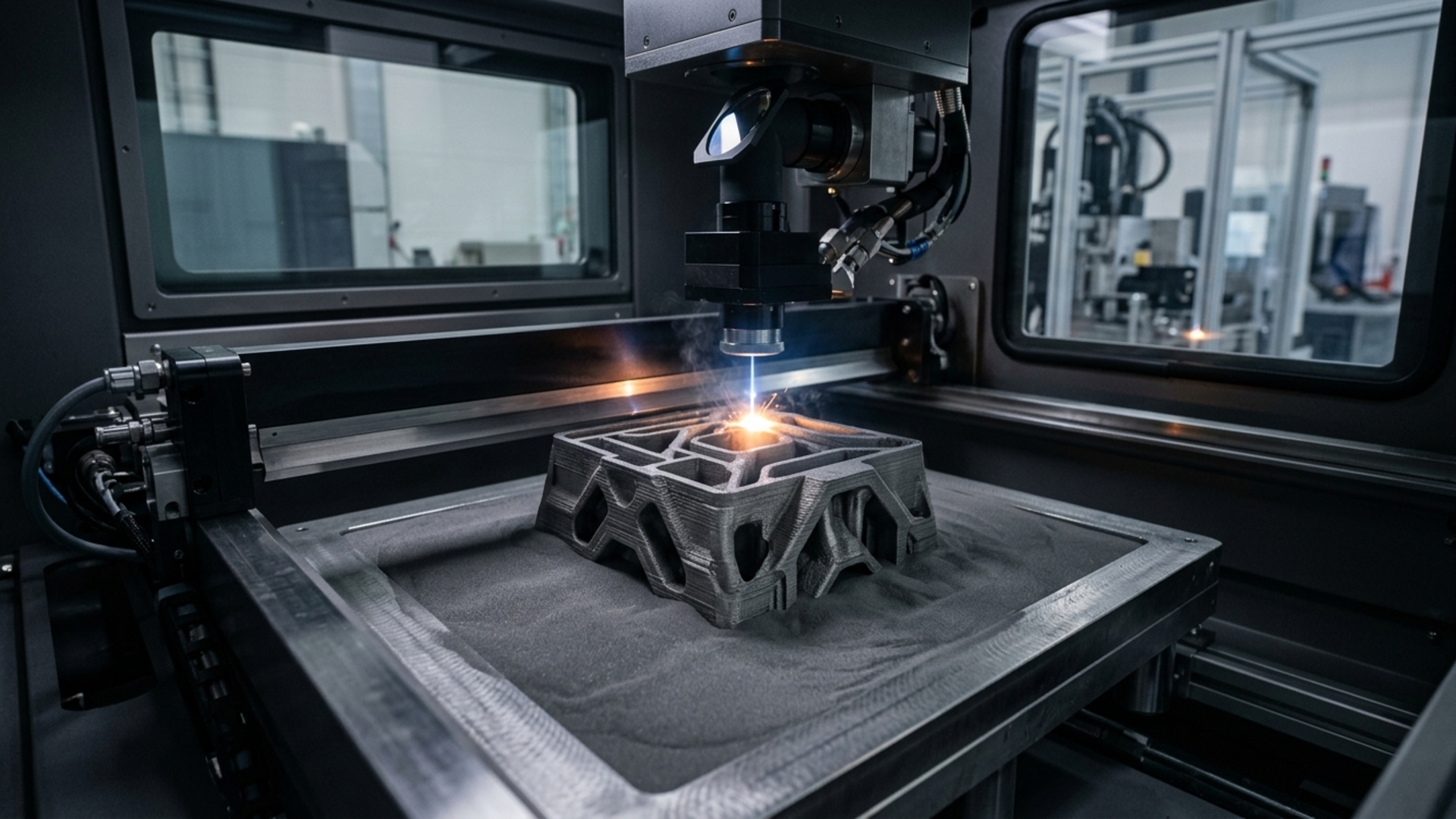
The term “3D metal printing” encompasses a number of technologies used to print metal parts. The technology usually involves melting or sintering metal powders, although some are mixed with other materials. Metals and alloys commonly used in powder form include aluminum, copper, nickel, steel, stainless steel, titanium, tungsten, and precious metals like gold, palladium, platinum, and silver.
There are a number of main metal printing technologies, including selective laser melting (SLM), direct metal laser sintering (DMLS), electron beam melting (EBM), and a few others. Some of these are less common, so we will not discuss them. Let’s take a closer look at the technologies mentioned.
One of the main methods of metal printing involves melting the metal with a laser in an inert atmosphere. The process is repeated layer by layer to obtain similar parts, and it is used to make details for the aerospace, automotive, and medical industries, including Metal 3D Printing Automotive applications.
As the name suggests, this technology sinters metal powders with a laser, also forming parts layer by layer. It is used to make prototypes and medical devices.
This technology is similar to SLM, but instead of a laser, an electron beam is used. EBM is also used to make parts from nickel and titanium alloys, and it is used in the aerospace industry.
The automatic correction and alignment function was developed in-house at JEOL and will ensure optimal focus and spot shape at the desired irradiation position.
The AM machine is helium-free, and the “e-shield” feature ensures that no smoke is emitted during the manufacturing process. In addition, the machine allows for the production of several parts at once, reducing waste and the time required to manufacture a single part.
It becomes possible to monitor the manufacturing process and the state of the machine remotely, thus saving time on the road. Thanks to the alarm function, the operator will be able to respond promptly to changes in the operating conditions of the machine.
3D metal printing provides a range of technologies for producing complex metal components with applications across aerospace, automotive, medical, and energy industries. Choosing the right process depends on the material, design requirements, and production goals. For those looking for Best metal 3D printing services, it is important to work with an experienced provider that can recommend the right technology for the application. If you need further guidance, contact us to learn more about metal 3D printing solutions.
