

Discover the Creativity of the Future: Use 3D Printing to Bring Your Ideas to Life
Suite 20-01 & 20-02B, Level 20 The Pinnacle, Persiaran Lagoon, Bandar Sunway, 47500 Subang Jaya, Selangor, Malaysia
hello@custommetal3dprinting.com
+60 124838830
The traditional ceramic manufacturing technology has some inherent shortcomings, such as the long lead time (usually needs 8-12 weeks), inability to realize some geometric structures (such as hollow spheres), and some structures or geometric configurations need additional machining, which requires expensive machinery. For example, some patterns or models need to be machined before and after sintering, and special carbide or diamond tools are required for machining, which is costly and time-consuming. Thus, small manufacturers may have to pay a lot for a long lead time.
Table of Contents:
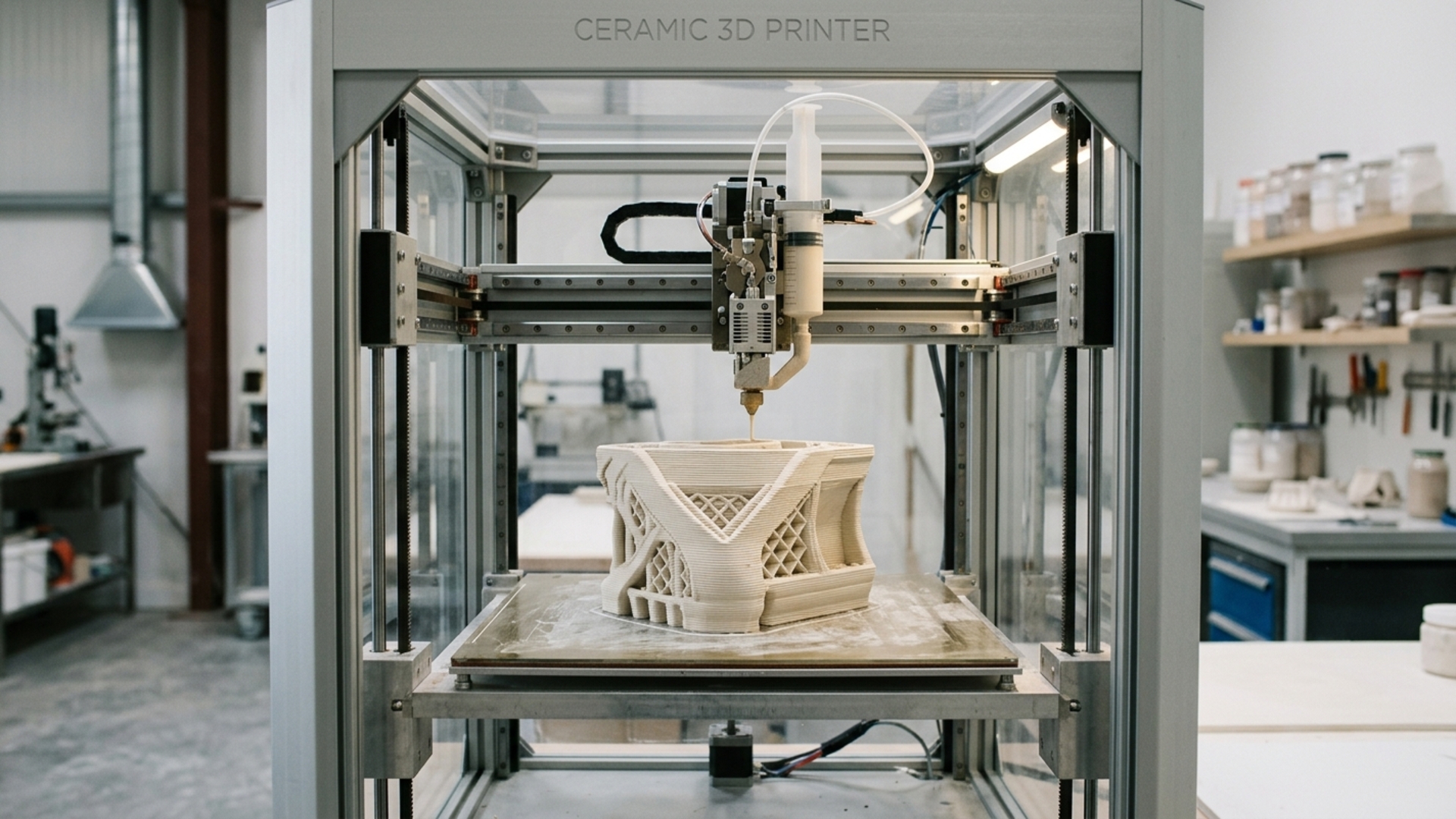
Ceramics 3D Printing is a relatively new technology, which can shorten the production time by 90% and deliver the products in 5 days. In addition to saving time, it also allows design changes during the ceramic production period.
There are many types of ceramic materials for 3D printing technology. For instance, alumina ceramic (alumina filler) has a relatively low hardness compared to other ceramics. Another type is the extremely tough zirconia ceramic (zirconia silicate filler). They can resist oxidation at 1500-1700 degrees and have a dielectric strength of 150 kV/mm.
In addition, alumina ceramic materials have excellent wear resistance and corrosion resistance, and therefore are an ideal choice of raw materials for mechanical manufacturing.
Alumina ceramics are renowned for their excellent properties and are in great demand in the market. The ceramic has high strength and hardness. In addition, it has outstanding wear resistance and can resist abrasive and erosive forces.
Furthermore, alumina ceramics have excellent corrosion resistance and thermal stability. They can maintain their physical properties at high temperatures.
Another feature of alumina ceramics is that they have a good dielectric strength. Therefore, high voltages are unlikely to damage the material.
To sum up, alumina ceramics have many excellent properties, making them a very useful and versatile material.
Alumina ceramics are often used to make nozzles in high-friction environments, such as sandblasting. This is because of the material’s outstanding wear resistance. Alumina ceramics are applied in air gun protection covers subjected to high temperatures, such as welding equipment.
In addition, in a corrosive environment, alumina ceramics are used as a substrate for mounting tactile sensors in the automotive industry. The material is used in the electrical industry, for example, insulators. Moreover, by using Ceramic Resin 3D Printing technology, complex structures such as half-hollow spheres can be made, which reduces the weight of the parts and thus reduces costs. Such applications are used in the aerospace industry and the automotive industry.
In conclusion, although the traditional ceramic manufacturing technology has many shortcomings, the new Ceramic 3D Printing Binder Jetting technology can reduce the production time by 90%, thus bringing the product to market faster and allowing the design to be changed during the production process. Connect with us today to know more about 3D Ceramic Printing.
