

Discover the Creativity of the Future: Use 3D Printing to Bring Your Ideas to Life
Suite 20-01 & 20-02B, Level 20 The Pinnacle, Persiaran Lagoon, Bandar Sunway, 47500 Subang Jaya, Selangor, Malaysia
hello@custommetal3dprinting.com
+60 124838830
The impact of 3d printing on the aerospace industry is undeniable. The competitive advantage it provides to companies and agencies in the sector is immeasurable both in terms of cost and the rate at which innovation can take place. As an industry which is always looking to push the boundaries of technology, it is unsurprising that it was also among the first to begin regular use of 3d printing for modelling and production. Aerospace companies have been investing in the research and development of 3d printing since its invention in the late 80’s.
Table of Contents:
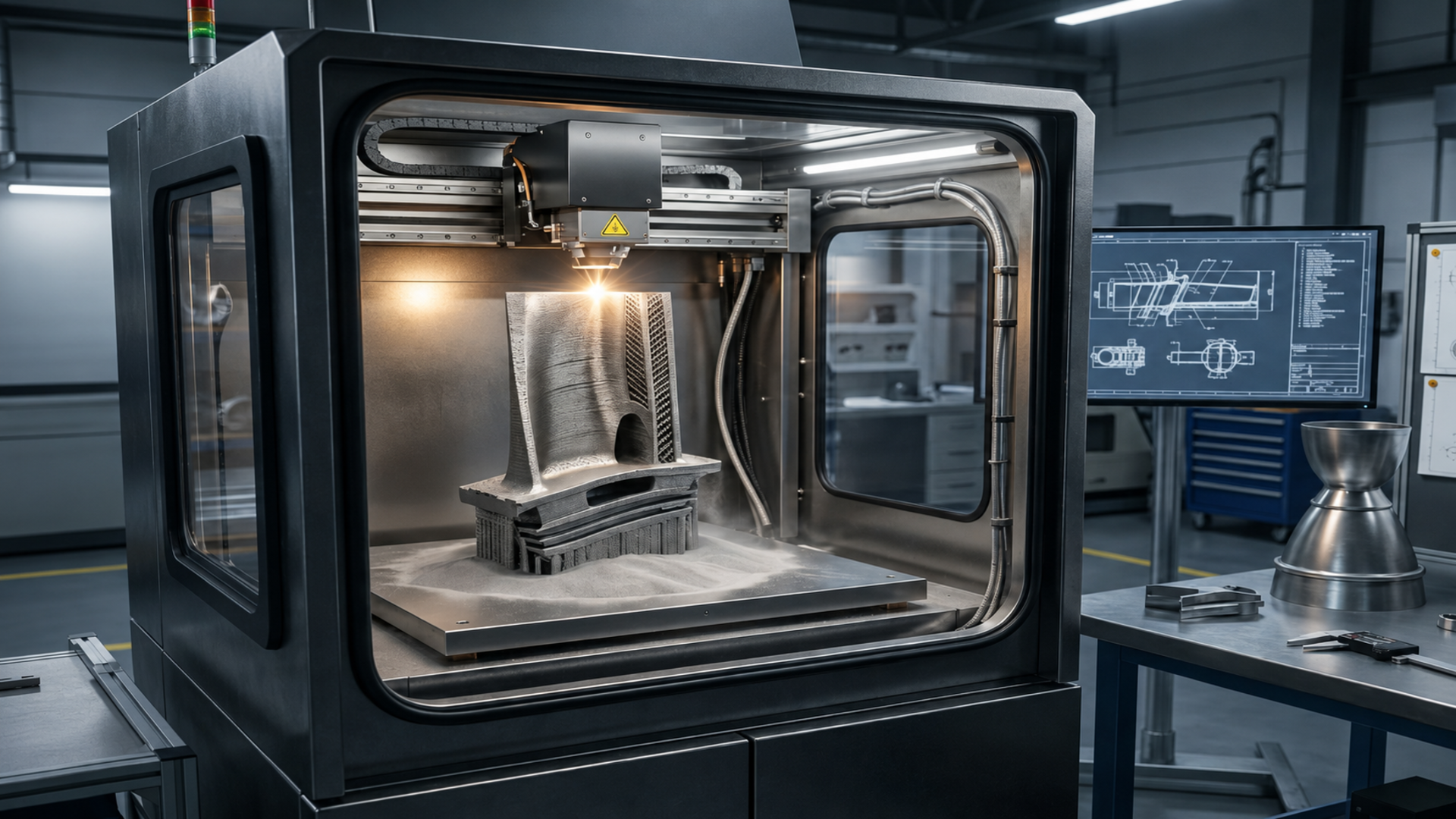
What we see now is the fruits of that labour being applied across the industry-leading firms, from training to modelling to testing and production.
Let’s take a closer look at the role of additive engineering in the aerospace field.
3D Printing, also referred to as additive engineering, is having an enormous impact on the aerospace industry. Additive manufacturing applications are growing rapidly and hold great promise for the future of the sector. The benefits of 3d printing in terms of being able to produce lightweight parts and on-demand aircraft components offer significant advantages over current methods in the industry.
3d printing in aviation can be incredibly valuable in the creation of lightweight components essential to the fuel economy and performance of aircraft. The development of Aerospace 3D Metal Printing has further enhanced the ability to manufacture strong and lightweight components that meet the requirements of modern aerospace applications.
The aerospace sector has seen rapid adoption of 3d printing, also known as additive manufacturing, to revolutionise the industry’s design, production, and maintenance processes. This technology has facilitated the production of aircraft parts that are both lightweight and high-performance in an unprecedented manner. Additionally, 3d printing in aerospace has enhanced the industry’s supply chain by enabling faster and more efficient production of high-performance parts. The aerospace industry benefits substantially from additive manufacturing in its capacity to innovate rapidly, reduce material wastage, and improve the overall performance of its products.
3d printing in the aerospace industry can be hugely valuable in the reduction of costs. With 3d printed materials, there is less wastage due to only the required amount being used, and engineers are able to innovate and come up with design geometries which require less material to be used. 3d printing can also offer low-cost alternatives to conventionally manufactured parts and produce injection moulded parts much faster.
The cost reduction can also be seen in application with 3d printed parts being lighter and therefore contributing to fuel economy. The use of Component 3D Printing in Aerospace has allowed manufacturers to produce specialised components more efficiently while reducing material waste and production costs.
3d aerospace printing offers a huge degree of customisation and flexibility. Parts and components can be 3d printed and tailored to specific requirements for testing and even general use. High-performance materials are essential in the production of lighter and stronger components which in turn allow for greater fuel economy and compliance to industry regulations.
The flexibility that this technology enables can lead to much faster iteration of parts, testing, amending and retesting without the need for outside sources for components.
This quick production of parts can be essential in an industry which races to release products and be the first on the market.
3d printed components can offer major performance gains. They are lightweight, durable and able to be created with complex geometries.
This opens up opportunities for companies to utilise these benefits to see increases in performance in all sorts of areas.
Now let’s take a look at some of the potential practical applications of 3d printing in the aerospace industry. The adoption of 3D Printing for Aerospace has enabled companies to explore new possibilities in aircraft manufacturing, prototyping, and maintenance processes.
3d printing has huge potential in prototyping components and testing their performance. It is much faster and cheaper to 3d print prototypes than to use conventional methods. As a result, prototyping timelines are greatly reduced, and businesses can test their ideas much faster. Firms can quickly produce prototypes to test their design concepts and iterate rapidly. 3d printing also allows for production of cheaper prototype components necessary for testing new design concepts.
It can be very expensive and resource-intensive to produce spare parts for aircraft, and aerospace companies can benefit substantially from being able to 3d print components on demand. 3d printing can also be used to produce aircraft parts, particularly those which are difficult to source, and create visually impressive prototypes necessary for aerodynamic testing. Having the ability to rapidly produce spare parts can greatly reduce storage and maintenance costs and downtime for companies involved in the industry.
3d printing can enable greater opportunities for training and practical experience for engineers and other staff. With the expensive materials traditionally used in the aerospace industry, 3d printing can open doors for students to develop their engineering skills without breaking the bank or risking damage to materials.
This benefit can also be seen further up the career ladder where engineers and companies can utilise 3d printing to continually hone their design skills and practice on new projects.
Major companies across the aerospace industry such as Boeing, Airbus and NASA are already reaping the rewards of additive manufacturing. The aerospace and defence industry are major proponents of the use of additive manufacturing technologies to gain a competitive advantage. These firms understand that additive manufacturing techniques provide a substantial competitive advantage over others, both in terms of supply chains and novel production methods.
Boeing produces numerous components using 3d printed parts, and has tested the main rotor system for the AH-64 Apache attack helicopter. Meanwhile, Airbus and partners have developed the first metal 3d printer for the European Space Agency.
For 3d printing in the aerospace industry, there are two key areas of challenge and limitation: materials and sign-off.
3d printing technologies can be used to produce a wide variety of components including crucial aircraft engine parts due to the benefits that they offer in terms of time saved and materials. Whilst there are rapid developments and improvements being made in both materials and 3d printing technology, some materials are more specialist than others and are not suited to additive manufacturing methods. Although this limitation may slow down the progress that additive manufacturing is making, there are rapid developments being made to 3d printing techniques which can utilise new materials being developed to enable greater flexibility. Companies within the industry are already adopting new materials made possible by k1max printers to produce lightweight components.
The aerospace industry is highly regulated, and it is incredibly important that components are fit for purpose.
Due to this high standard, there are additional challenges when trying to get 3d printed materials signed off. Techniques such as non-destructive testing (NDT) can be employed to test materials and uncover any hidden defects or weaknesses, and these methods can offer significant assistance when signing off materials.
As 3d printing technologies continue to develop in the aerospace industry, the capabilities of 3d printers and the technology inside them will only become more impressive. SpaceX is considering using 3d printed materials for deep space exploration, whilst NASA is continually developing new methods of using additive manufacturing to further develop the industry and reduce costs. As the potential for 3d printing is further explored, companies across the industry have seen substantial benefits. Although basic 3d printers have been present on the International Space Station since 2014, it is not surprising that companies are constantly updating their models in order to utilise the latest technology. The models which were launched to the station in 2024 are utilising the world’s first ever metal 3d printer in space. With the ability to create components relatively quickly and out of fewer materials, it is possible that replacement parts can be produced “on demand” directly from space stations which will improve the safety and cost-effectiveness of space travel and reduce the need for stored replacement materials, greatly aiding exploration.
This technology has enormous potential to be utilised across the industry to help agencies be innovative and reduce costs without concern for a shortage of materials and parts.
There are few industries that saw as many benefits from additive manufacturing as the aerospace industry has experienced. Components are cheaper, lighter and easier to replicate using 3d printing.
With the huge potential that this technology has for the aerospace industry, it is sure to see continued investment from companies within the industry, and it will be fascinating to see what new components can be created using aerospace 3d printing in the near future. For businesses looking to explore advanced additive manufacturing solutions, you can reach out to our team for further assistance.
3d printing offers multiple benefits for the aerospace industry, from reduced costs to new opportunities for production of lightweight parts, customization and improved performance in aerospace applications.
3d printing can be extremely cost-effective for aerospace engineers and manufacturers. By reducing the amount of waste and removing the need for expensive tools, 3d printing can greatly impact the bottom line of any project.
We can expect to see a number of advances in aerospace 3d printing, from greater variety in materials to the ability to produce multiple materials at once and even the ability to manufacture components in space, truly revolutionising the field. The growth of the Aerospace 3D Printing Market reflects the increasing adoption of additive manufacturing technologies and the continuous development of innovative solutions within the aerospace sector.
