

Discover the Creativity of the Future: Use 3D Printing to Bring Your Ideas to Life
Suite 20-01 & 20-02B, Level 20 The Pinnacle, Persiaran Lagoon, Bandar Sunway, 47500 Subang Jaya, Selangor, Malaysia
hello@custommetal3dprinting.com
+60 124838830
An industry known for its innovation and high-performance needs has jumped on board the 3D printing bandwagon. In this article, we will explore the technical aspects of how 3D printing of metal informs aerospace design and how Aerospace 3D Metal Printing contributes to the development of advanced aircraft components.
Table of Contents:
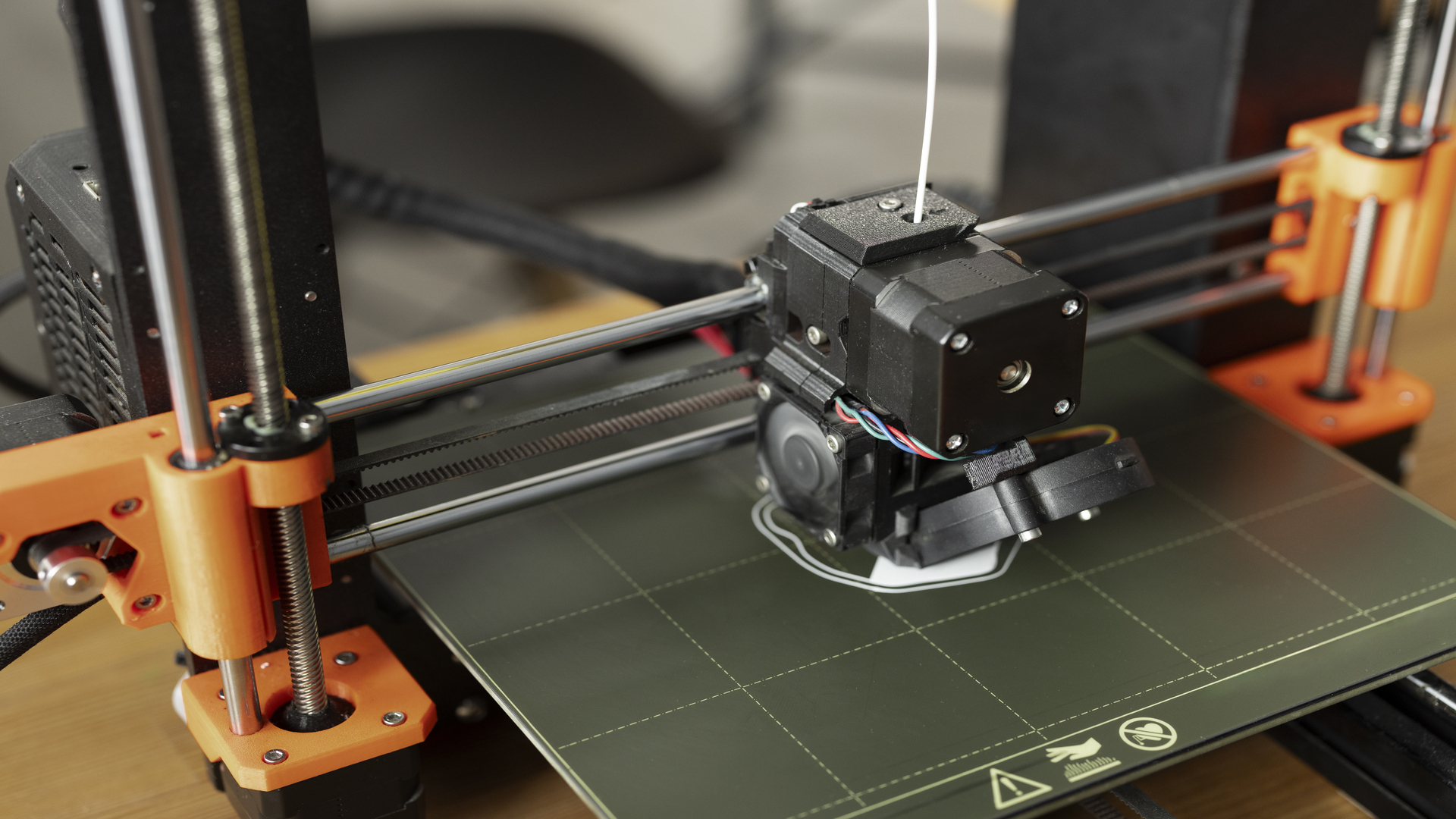
Fuel consumption is one of the most important considerations in aeronautic design. When it comes to weight, each pound matters. Metal additive manufacturing (AM) is a promising solution to this challenge. Being able to create complex shapes, AM allows engineers to think outside the box and come up with innovative designs that lead to substantial weight reductions.
Aerospace components tend to involve a high degree of customization. Conventional manufacturing methods can be too limiting, both in terms of design versatility and cost-effectiveness, for certain niche applications. Metal 3D printing, on the other hand, is ideal for bringing unique ideas to life and can be used to produce bespoke aircraft parts, meeting the most specialized needs. This makes Component 3D Printing in Aerospace a valuable solution for manufacturers requiring customized and high-performance parts.
The aerospace industry generates significant amounts of waste, both dangerous and innocuous. According to the Toxic Release Inventory (TRI) Program, it can produce as much as 73.7 million pounds of waste per year. There are a number of possible sources of waste, and the industry has a complex system for managing it. Nevertheless, experts estimate that 30–50% of the materials used in aircraft production are wasted due to specific characteristics of manufacturing processes.
Metal 3D printing is an additive process, meaning that it involves adding material layer by layer to form the desired shape. This drastically reduces the amount of waste generated as a result of manufacturing. It also provides economic benefits due to its ability to utilize expensive materials, making it easier to recycle them by retrieving the powders from the printing bed. Experts identify AM’s “design and process flexibility” as a significant waste reduction factor. Aside from being more efficient in material use, 3D printers have fewer peripheral systems, which makes them more energy efficient. It also lowers the burden of transporting parts over long distances from one manufacturing site to another. Another way that additive manufacturing (AM) reduces waste is by virtue of being able to print customized components directly. This eliminates the need for inventory management, which can be both costly and wasteful in the context of aerospace manufacturing.
Aircraft and spacecraft components require the use of high-performance materials that can endure extreme conditions. Metal 3D printing can utilize a wide range of materials, including titanium alloys, aluminum alloys, stainless steel, cobalt-chromium alloys, and nickel-based superalloys. Some high-performance metals are known for being exceptionally lightweight while also being remarkably strong and resistant to oxidation or corrosion. These properties are critical for aerospace applications, where reduced weight is a priority due to fuel conservation needs and mechanical stress during take-off, landing, and flight.
Modern aircraft and spacecraft design involves extensive computer modeling to ensure optimal performance. One area where computers and software play a crucial role is finite element analysis (FEA), a method used to predict how a component will behave under real-world conditions. When it comes to 3D printing, topology optimization is the key to unlocking the full potential of the technology in aerospace design. Topology optimization is a computational method that allows engineers to iteratively adjust a component’s design in order to make it as light as possible while maintaining its structural integrity and performance characteristics.
Another advantage that 3D printing has over conventional methods is its ability to consolidate multiple parts into a single one. This is beneficial because it often leads to significant reductions in material use and weight while also making the part easier to assemble. For example, GE’s Leap engine nozzle was created using 3D printing technology which allowed the GE team to merge 20 different parts into a single 3D printed component, making it lighter and stronger than before. By using FEA in combination with computer modeling and simulation to tweak the design and optimize it for additive manufacturing, researchers and engineers are able to bring new aerospace components to life.
There are still some hurdles to overcome before additive manufacturing can be widely adopted for aerospace applications. In particular, certification and qualification of 3D printed parts is a major concern for the industry. It is critical that the components possess the necessary quality and reliability to function correctly and safely.
We are aware of the immense potential that 3D printing holds for aerospace applications. We work tirelessly to explore it, bringing our experience and technical expertise to bear on the task. The goal is to ensure that the aerospace industry is able to achieve its objectives and continue innovating and venturing into the unknown.
The continuous growth of the Aerospace 3D Printing Market highlights the increasing adoption of additive manufacturing technologies to improve aircraft performance, reduce production limitations, and support future aerospace innovations.
The development of 3D Printing for Aerospace continues to transform how engineers approach design, manufacturing, and component optimization. As more industries adopt metal additive manufacturing, aerospace companies can achieve greater efficiency, customization, and performance.
For more information about advanced metal 3D printing solutions and how they can support your aerospace projects, feel free to contact us through our support team for further assistance.
Metal 3D printing is becoming an important technology in aerospace design by enabling lightweight structures, customized components, reduced material waste, and improved manufacturing efficiency. Although certification and qualification challenges remain, continued advancements in materials, software, and additive manufacturing processes are helping the aerospace industry move toward more innovative and reliable solutions. Connect with us now.
