

Discover the Creativity of the Future: Use 3D Printing to Bring Your Ideas to Life
Suite 20-01 & 20-02B, Level 20 The Pinnacle, Persiaran Lagoon, Bandar Sunway, 47500 Subang Jaya, Selangor, Malaysia
hello@custommetal3dprinting.com
+60 124838830
Sometimes called additive manufacturing, 3D Metal Printing Services is transforming the manufacturing industry by cutting costs, offering more complex design options, and reducing waste.Metal finishing, also known as plating, helps manufacturers get even more value from their 3D-printed parts and products by increasing their strength and reducing contact resistance. Because metal finishing and Metal 3D printing service can work together, it’s important to understand how metal finishing adds value in the Metallic 3D Printing process.As you explore what 3D printing is, its uses, and its benefits, it’s also helpful to learn about the benefits of metal finishing and the challenges you might face.
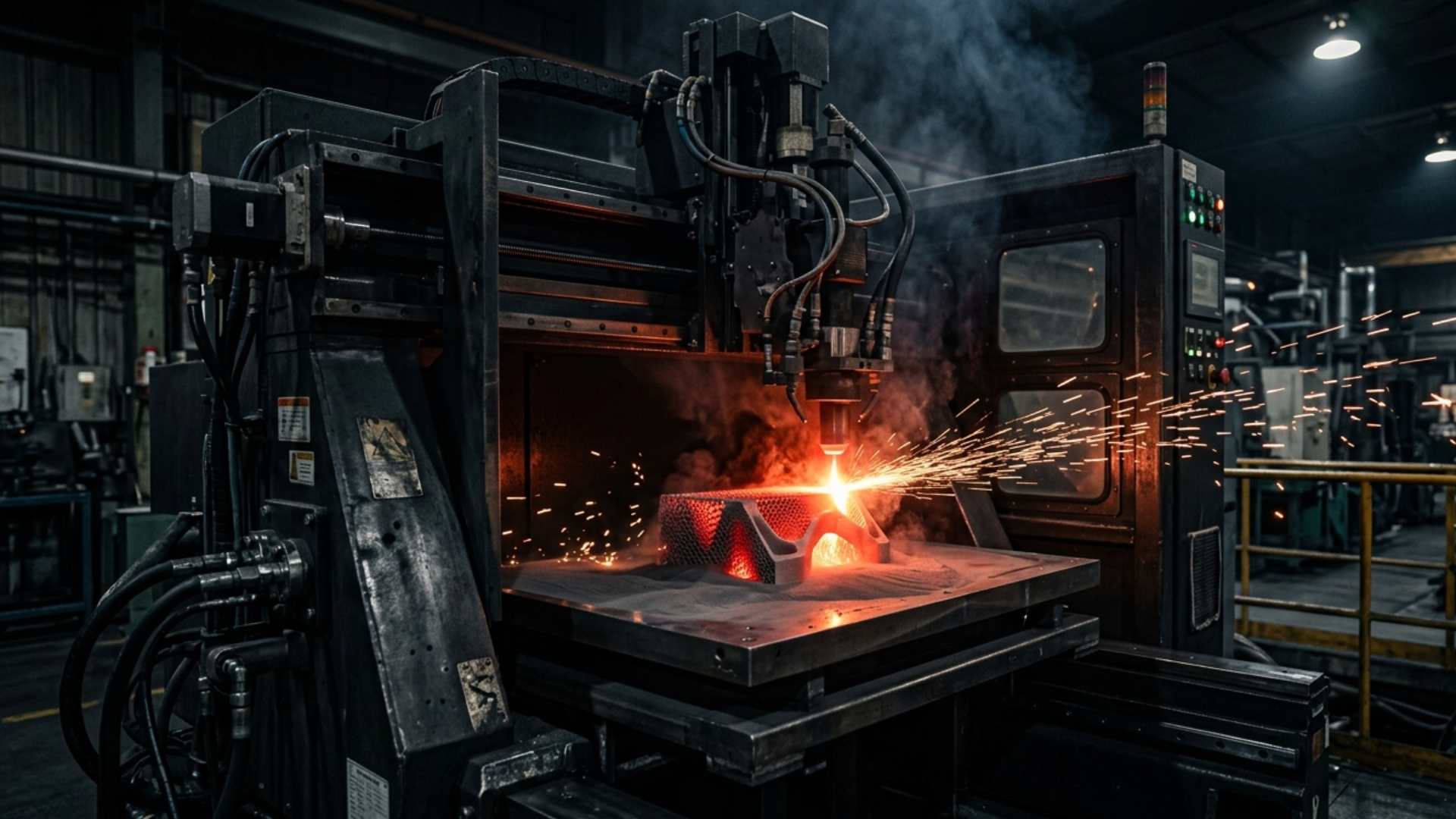
Because of its many advantages, many manufacturing companies use 3D printing to enhance their operations.The speed and cost-effectiveness of 3D printing allow it to support product improvements, both for low-volume and high-volume production. This adaptability makes 3D printing suitable for a wide range of companies in the manufacturing sector.
Here are some of the main ways manufacturing companies are using 3D printing:
As 3D printing becomes more popular in the manufacturing industry, it’s clear that it offers a wide range of benefits.The main advantages of 3D printing in manufacturing include cost and waste reduction, more in-house manufacturing capabilities, and greater design complexity.
Here are some of the key advantages of additive manufacturing:
Metal finishing is an effective way to enhance the protection of a part or product and improve its functionality. When a company applies a metal finish to a product or component, they coat the item with a layer of metal, which improves its resistance to damage and increases its durability. When printing 3D parts, there are several methods available for applying plating, and there are several benefits to choosing to plate them.
Although there are many benefits to using metal finishing, there are also some challenges when applying it to 3D-printed parts.By considering a few factors, you can address these challenges when working with your 3D-printed parts.
Find out more about some of the common challenges associated with plating onto 3D-printed products, as well as some key questions to consider before applying a metal finish to your 3D-printed parts:
One of the main challenges when plating 3D-printed parts is that some plastics are not suitable for plating.In general, it is more difficult to plate plastics with high chemical resistance. Some plastics, like those in the Valox (PBT) family, are particularly challenging to plate. Performance-match polyester resins that you should avoid include PVC, polyethylene, and polyester.
Plastics in the Noryl family can be plated, but they need to be in a blended form.Some examples of these plastics include xenoy, xylex, and urethane. Nylon polymers also need to be in a blended form, with examples like PPS, polypropylene, and PEEK.Although there are some plastics you might want to avoid, there are plenty that are easier to plate.
Some of these include:
Another challenge is determining whether plating 3D-printed parts is cost-effective.Using non-traditional plastics can significantly increase costs, as they often require more setup processes to apply a metal finish. This can lead to affordability concerns for a company. Instead of using non-traditional plastics, it might be more practical to switch to traditional, cost-effective plastics that are easier to plate.
Additionally, larger parts tend to have higher metal finishing costs. Like non-traditional plastics, larger parts usually require more setup processes to achieve a high-quality metal finish. Because of this, you might want to evaluate the cost of plating larger parts before starting production. If you’re committed to using a larger part, consider working with a metal finishing company that offers cost-effective plating solutions.
If you decide to use non-traditional plastics or larger 3D-printed parts, it could make it harder for your company to scale up production. As the costs and time required for more complex processes increase, you may not have sufficient funds or time to manage these products. Before committing to plating specific types of 3D parts, you should also check whether they will provide the profitability you seek as you grow your production.
Scaling up on your own can be challenging, especially when using non-traditional plastics or specialized finishing processes. Working with a company that specializes in metal finishing can be beneficial. Even if you’re using traditional plastics, a plating company will often have the necessary equipment and processes to effectively apply metal finishes. Thanks to a metal finishing company’s advanced capabilities, you may be able to make plating a previously difficult 3D part more scalable.
Use SPC to plate your 3D-printed components. By offering a variety of coatings and plating techniques to provide your parts with the necessary protection, SPC can help you get the most out of your 3D-printed goods. We give you more options for the kinds of products you may make since we can plate onto intricate plastic components. Our cutting-edge facility and machinery guarantee that we consistently provide excellent Precision 3D Printing Solutions, metal finishing services and expedite the plating procedure.
Find out more about the 3D Metal Printing Services Nearby we can offer you right now. Please get in touch with us or obtain a free quote if you’re interested in working with us on your metal finishing needs.
