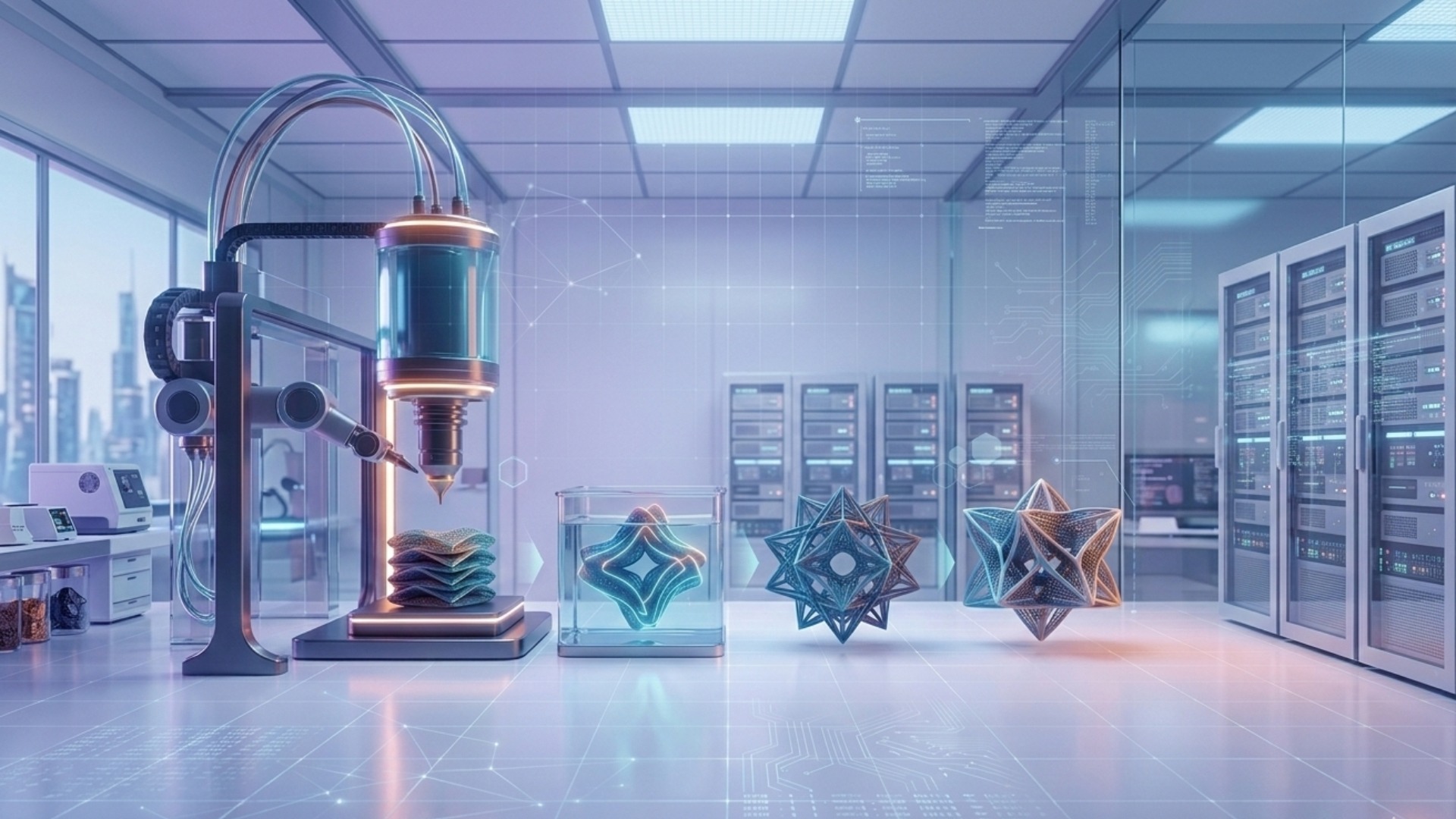
4D Printing: The Next Evolution in Additive Manufacturing

The manufacturing sector has seen a revolution in recent years thanks to the development of additive manufacturing, or 3D printing. With the help of this cutting-edge technology, individuals can now make products with intricate structures and designs that were previously unattainable with conventional manufacturing techniques. But what if we could use this technology to make things that have the ability to change their shape and functionality on their own? This is the concept behind 4D printing, a new technology that gives printing a fourth dimension. We will go over all you need to know about 4D printing, its uses, and how it differs from 3D printing in this extensive tutorial.
4D Printing Technology

What is 4D Printing?

Using smart materials that can change their structure and characteristics over time, 4D printing is a sophisticated type of additive manufacturing. While 3D printing makes it possible to create static, fixed-shape items, 4D printing goes one step further by using smart materials that react to external stimuli like moisture, light, or temperature. When subjected to particular environmental conditions, some materials can alter their usefulness, form, or other physical characteristics.

How Does 4D Printing Work?

With the addition of intelligent or responsive materials, the 4D printing process is comparable to that of 3D printing. Using computer-aided design (CAD) software to create the object’s 3D shape is the first stage in the 4D printing process. Choosing the right smart material for the thing comes next after the design is complete. This substance could be renewable soybean oil, a shape memory polymer, or any other substance that can alter its characteristics in reaction to outside stimuli.

Following design and material selection, an additive manufacturing technique like selective laser sintering (SLS) or fused deposition modeling (FDM) is used to print the product layer by layer. The ultimate 3D shape of the object is progressively constructed by depositing the smart material layer by layer. When subjected to the proper external stimulus, the printed object is prepared to undergo its programmed shape transformation or other in-service alterations.

Advantages of 4D Printing

Compared to conventional production techniques and even 3D printing, 4D printing services has a number of advantages. Among the main benefits are:

  • Increased Customization: 4D printing makes it possible to create products with special qualities that can be adapted to certain uses or user requirements. A new degree of personalization is added to the production process by the capacity to alter shape or functionality over time.
  • Enhanced Efficiency: Systems can become more efficient when objects have the ability to modify their shape or functionality on their own. Adaptive aerospace components or self-assembling structures, for instance, can maximize efficiency and save fuel usage.
  • Decreased Material Waste: 4D printed items may be able to fix themselves or adjust to changing circumstances, which would cut down on the requirement for replacement parts. This may help create a manufacturing process that is more environmentally friendly.
  • Sustainability: Renewable soybean oil is one of the smart materials used in 4D printing that is environmentally benign and helps create a more sustainable manufacturing process. 4D printing can lessen manufacturing’s negative environmental effects by using these materials.

Disadvantages of 4D Printing

Although 4D printing has many benefits, there are some disadvantages as well. Among them are:

  • Complexity: Compared to conventional 3D printing, designing and producing 4D printed products may be more difficult. To successfully comprehend and make use of the features of smart materials, one must possess significant knowledge of materials science and engineering.
  • Cost: Compared to conventional 3D printing, 4D printing may be more costly due to the usage of smart materials and specialist printing techniques. The total cost of production may go up due to the price of these ingredients and the extra complexity of the printing process.
  • Restricted Material Options: The 4D printing technology market now has a small selection of smart materials, which limits the range of possible uses.

4D Printing vs. 3D Printing

The usage of smart materials is the main distinction between 3D and 4D printing. 4D printing adds the capacity to change shape or functionality over time, whereas 3D printing produces static, fixed-shape items. Numerous applications across multiple industries are made possible by this additional functionality.

Materials, usefulness, complexity, cost, customisation, and sustainability are some of the main areas where 3D and 4D printing diverge. 4D printing depends on intelligent or responsive materials, whereas 3D printing uses a variety of materials such plastics, metals, and ceramics. While 4D printed constructions might change shape or qualities over time, 3D printed objects stay static after manufacturing. Because 4D printing requires specialized materials and procedures, it is typically more difficult and costly. High customisation is possible with both methods, but 4D printing enables dynamic behaviors and adaptive qualities. Furthermore, 4D printing has the potential to provide more efficient and environmentally friendly solutions, whereas 3D printing’s sustainability depends on the materials utilized.

Applications of 4D Printing

Because of its special characteristics, 4D printing has the potential to completely transform a number of industries. Among the most important uses for 4D printing are:

  • Infrastructure and Construction: The development of self-assembling structures or materials that can mend themselves when broken could be made possible by 4D printing technology.
  • Soft Robotics: 4D printing makes it possible to build “soft robots” with flexible bodies that can adjust to their surroundings and carry out activities that conventional robots are unable to.
  • Medical Implants: 4D printing in healthcare enables items to be tailored to each patient’s unique need. Implants that alter their shape to encourage bone development or regulated medication delivery are two examples.
  • Aerospace Engineering: To improve performance and save fuel, 4D printing can be used to make airplane parts that can change shape while in flight.
  • Fashion and Clothing: 4D printed clothing may change color and design as needed, or it could adjust to the wearer’s body shape and the surrounding surroundings.

Examples of 4D Printing Projects

The promise of this technology has already been demonstrated by a number of fascinating 4D printing initiatives. Here are some noteworthy instances:

  • Self-Assembling Structures: Under the direction of Skylar Tibbits, MIT researchers have created self-assembling structures that change when they come into contact with water. These constructions show how 4D printing may produce items with the capacity to modify their shape on their own.

  • Responsive Materials: Researchers at George Washington University have created a shape memory polymer that can be 4D printed and utilized in a variety of applications, including medical devices and soft robots. In reaction to particular stimuli, some materials can alter their characteristics or form.

  • Bone Marrow Regeneration: Researchers have created a 4D printed scaffold that can encourage the regeneration of bone marrow. This technique has the potential to completely change how bone illnesses and injuries are treated.

The Future of 4D Printing

With continuous research and development focused at enhancing the technology’s capabilities, 4D printing has a bright future. We may anticipate more effective printing procedures, a wider variety of smart materials available, and the investigation of novel applications across numerous industries as materials science and additive manufacturing continue to progress.

To sum up, 4D printing is the next development in additive manufacturing. Customization, efficiency, and sustainability are all made possible by 4D printing’s use of smart materials that may alter their shape and functionality over time. Although 4D printing is still in its infancy, it has a wide range of possible uses, from soft robotics to aerospace engineering and medical implants. We can anticipate seeing the revolutionary effects of 4D printing on the manufacturing sector and beyond as research and development continue.

FAQ

1.What is the fourth dimension of 4D printing?
A: The ability of an object to alter its shape or usefulness over time in reaction to external stimuli like temperature, light, or moisture is referred to as the fourth dimension in 4D printing. 4D printing differs from conventional 3D printing in this additional dimension.

2.What is the 4D printing process?
A: In 4D printing, the object’s 3D shape is designed, the right smart material is chosen, and the object is printed layer by layer utilizing an additive manufacturing technique. The object’s capacity to alter its shape or characteristics over time is due to the smart material.

3.What is the purpose of 4D printing?
A: 4D printing has a wide range of possible uses in many industries. Soft robotics, medical implants, aeronautical engineering, fashion and clothing, infrastructure, and construction are a few examples. Numerous opportunities are made possible by 4D printed things’ capacity to evolve and adapt over time.

4.When will 4D printing be accessible?
A number of prototypes and proof-of-concept projects have already been finished, even though 4D printing is still in the research and development stage. As more developments and improvements are made, widespread commercial availability might still be a few years off.

5.What kinds of materials are suitable for 4D printing?
A: Smart or responsive materials that may alter their characteristics in reaction to outside stimuli are necessary for 4D printing. Although there aren’t many acceptable materials accessible right now, research is being done to find new alternatives and increase the number of options.

To explore your needs and learn how cutting-edge technologies can realize your ideas, get in contact with us right now. To begin your project, get in touch with us.