

Discover the Creativity of the Future: Use 3D Printing to Bring Your Ideas to Life
Suite 20-01 & 20-02B, Level 20 The Pinnacle, Persiaran Lagoon, Bandar Sunway, 47500 Subang Jaya, Selangor, Malaysia
hello@custommetal3dprinting.com
+60 124838830
3D printing metal jewelry brings up a whole new world of possibilities for designers, craftspeople, and marketers. Jewelry professionals today use modern materials and precision production to overcome the limitations of traditional manufacturing processes. A dedicated 3D jewelry printing service allows users to upload a design file and create prototypes or final pieces without the need for industrial machines. This breakthrough powerfully translates design intent into wearable reality.
Table of Contents:
Metal 3D printing for jewelry combines artistry and engineering to create unique rings, pendants, and limited edition collections. The procedure begins with a digital model and progresses via casting, finishing, and polishing until the piece is ready to wear. Designers with a strong vision and the correct metal 3D printing service jewelry partner may create intricate textures, bold forms, and personalised details with fewer constraints and shorter production runs.
Additive fabrication of precious metals is more than a method; it is a paradigm revolution. Jewellery designers can experiment with novel forms, optimize material utilization, personalize at scale, and experiment freely. The jewellery business is entering new terrain as it embraces additive metal 3D printing, bringing creativity, technology, and craftsmanship together.
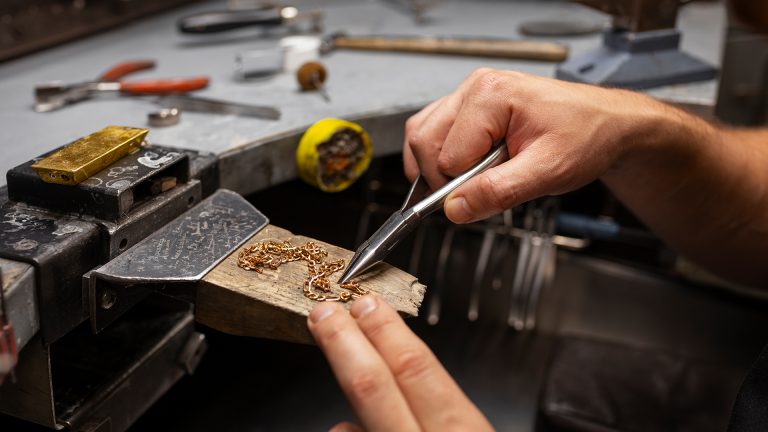
A professional 3D jewelry printing service begins when the designer or brand sends a digital 3D model. This file contains all of the details: form, volume, surface texture, and size. The print service examines the file for manufacturability, verifies the minimum thickness, guarantees adequate supports, and evaluates expert needs for precious metal casting. These first procedures convert an idea into a tangible product.
After approval, the model is printed (usually in wax or resin) and then cast. The model is often placed in a mould and filled with molten metal such as gold, silver, bronze, or brass. The resulting object is post-processed, which may include polishing, finishing, plating, or coating, according to the designer’s preferences. Each phase is managed by a powerful metal jewelry service, resulting in a piece that has the look and feel of traditional handcrafted work.
This method is appealing because it combines great precision with customisation. Designers swiftly alter digital files, evaluate renderings, and adjust designs before moving to metal. Metal 3D printing services for jewelry make it much easier to create bespoke or small-batch luxury pieces. This method allows for more design flexibility and speeds up the process of moving from concept to thing.
Material and finishing options are critical in the world of metal 3D printing for jewelry. Gold and silver dominate the precious metals industry, although premium services now include bronze, brass, titanium, and platinum. Each material has unique aesthetic and mechanical qualities. This decision influences price, weight, durability, and finish. Designers who work with a reputable business can see sample finishes, polish options, and plating effects ahead of time to ensure that the final product matches the brand’s identity and satisfies consumer expectations.
Techniques evolve swiftly. Some studios use direct metal laser sintering or selective laser melting to produce solid metal items. Some use wax-based printing in addition to lost-wax casting. These approaches produce intricate detail, thin walls, subtle textures, and complicated geometry. Integrating these processes enables a 3D jewelry printing business to produce results that compete with conventional handcrafted premium products.
Finishing marks the point at which the digital world connects with the art of workmanship. Following printing and casting, professional polishers, platers, and artists perform surface treatments such as sandblasting, high polishing, antique patinas, or color plating. A respected service ensures that the piece remains visually appealing, ging-free, pleasant to wear, and ideal for production or retail. Additive metal 3D printing distinguishes itself from entry-level production processes with its rigorous attention to detail.
Designers and brands are increasingly adopting additive metal 3D printing because it enables creativity, agility, and customisation. An effective service allows for quick movement from concept to market, design changes between runs, and personalized or made-to-order goods that reflect consumer demand. Using traditional instruments or hand-crafted methods, achieving this kind of responsiveness is tough.
Using a 3D jewelry printing service makes small-batch production less expensive. Instead of investing in expensive moulds and extensive production runs, designers might create limited editions, experiment with unanticipated trends, or explore experimental forms. This lowers risk and promotes creativity while maintaining excellent quality.
The surge in direct customer demand for one-of-a-kind, personalized jewelry emphasizes the importance of a dependable printing partner. Brands that use metal 3D printing services for jewelry may grow more quickly, alter collections seasonally, and provide personalized experiences that foster loyalty and brand differentiation.
Metal 3D printing is a disruptive force in jewellery design, altering manufacturing options. A robust 3D jewelry printing service provides designers with premium materials, complicated geometry, rapid iteration, and high-quality finishing, allowing them to turn ideas into wearable products. Whether you’re seeking one-of-a-kind items or planning a production run, additive metal 3D printing is a cutting-edge solution. Bring your jewelry design to life with precision, detail, and adaptability. Contact us today to talk about how we can make your vision a reality.
