

Discover the Creativity of the Future: Use 3D Printing to Bring Your Ideas to Life
Suite 20-01 & 20-02B, Level 20 The Pinnacle, Persiaran Lagoon, Bandar Sunway, 47500 Subang Jaya, Selangor, Malaysia
hello@custommetal3dprinting.com
+60 124838830
Ever since the invention of additive manufacturing (AM) technologies throughout the 80s and 90s, also known as 3D printing, the possibility of transforming raw materials into freeform designed objects with unprecedented complexity has allowed to envision new medical devices. In fact, the shapes of the nature and the human body are extremely complex, with fractal and multiscale patterns, plus an extraordinary variety of functions, including graded distributions of properties, topology, and topography optimization, among other features. Therefore, subtractive manufacturing technologies, shaping molds, and high-rate production technologies are inadequate to manufacture personalized medical devices, able to replicate life’s complex forms and functions. This has contributed to growing interest in 4D Printing In Healthcare as an approach for developing medical devices that can better respond to complex biological needs.
Table of Contents:
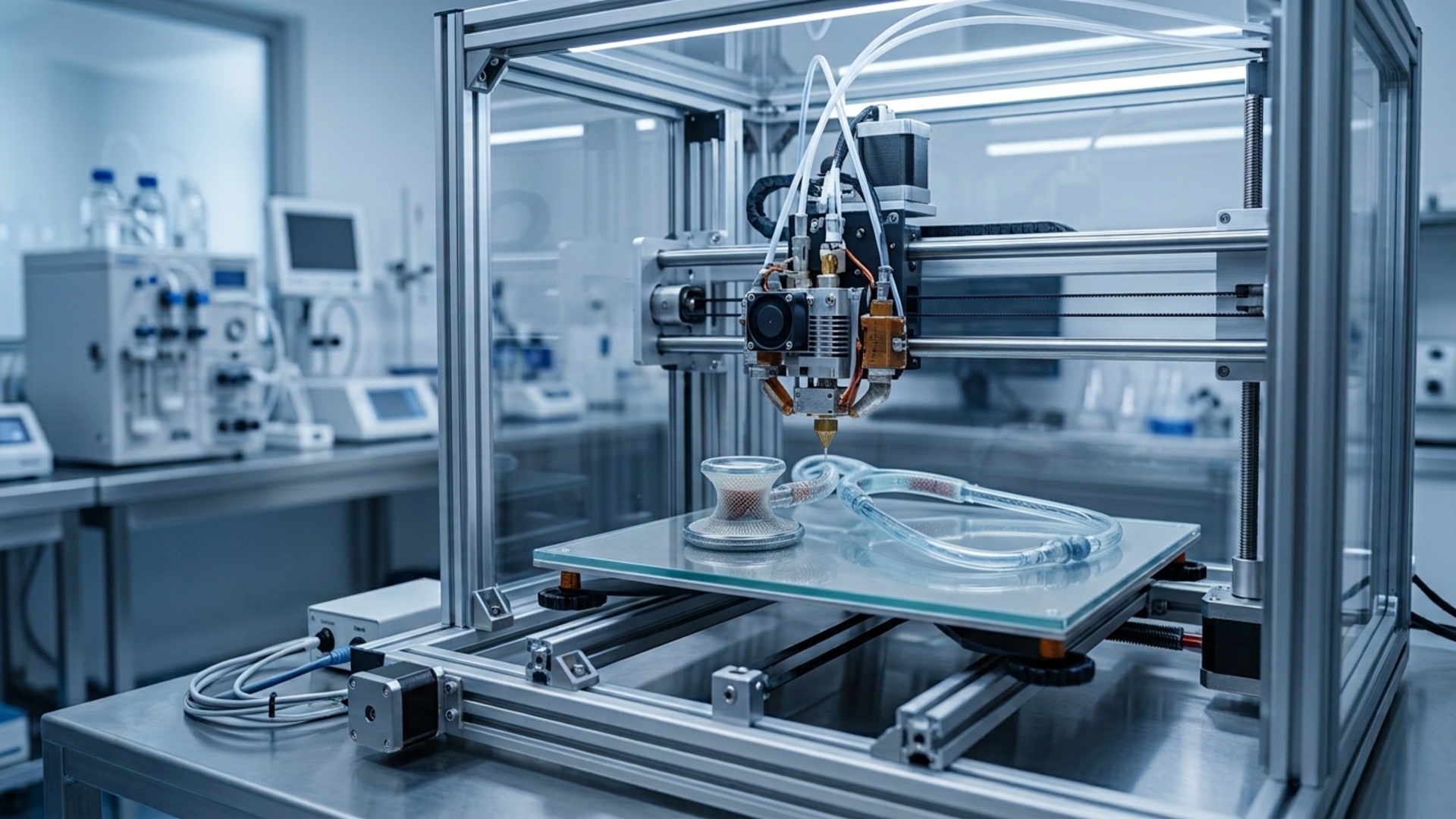
During the last decade of the twentieth century, 3D printing enabled a variety of medical applications related to surgery planning and guidance, orthoses and surgical guides for safer interventions, more ergonomic appliances, and even patient-specific implants obtained from medical images as input data. 3D printing was also key in tissue engineering, as scaffolds manufactured through AM technologies using biocompatible materials have been widely exploited as cell culture systems and implants for in vivo tissue repair. Afterwards, an extensive variety of materials, along with the improved resolution, performance, and throughput of industrial additive manufacturing technologies, and the appearance of bioprinting (additive manufacturing of cell-laden biomaterials) have made us imagine the real possibility of printing patient-specific functional tissues and organs for regenerative medicine. This growing field is also contributing to the development of the 4D Printing Technology Market as researchers and industries explore new healthcare applications.
However, 3D printed medical devices (and even 3D bioprinted constructs in most of the cases) still fail to completely replicate the dynamism of living tissues and organs, evolving according to patient’s healing and growth processes, and ultimately transforming their shape in order to improve their interactions with the environment, as 4D printed biodevices would allow. The fourth dimension (time) is incorporated into printed structures through their ability to morph into different shapes, possibly multiple times, and even reversibly, after fabrication through the use of particular combinations of geometry and materials together with additive manufacturing technologies.
Indeed, for almost two decades, researchers in additive manufacturing have been exploring design methods to print “smart” shape-morphing objects, usually exploiting the presence of mechanical stresses inside the printed structure, or the possibility of 3D printing assemblies including smart mechanisms, kinematic chains, or textiles, or even developing soft stimuli-responsive structures or 3D printed shape-memory structures using smart multifunctional materials. It may be said that the denomination “4D printing” as current designation appeared more recently. In any case, the 4D Printing Technology paradigm fits within the previously mentioned 3D printing applications to healthcare and adds another layer to the paradigm shift that additive manufacturing is enabling in the biomedical industry, namely the possibility to develop high rate customized products as an alternative to traditional manufacturing approaches based on mass production, as explained next.
Life consists of shape transformations: from embryonic development and organogenesis, and birth, through adulthood to aging. Smart medical devices, at their turn, should not only be able to sense their state and the state of their hosts and adapt their operation, but also morph their shape during their lifetime according to the need of the surgical or therapeutic intervention, as well as the healing, growth, and remodeling of the patient’s healthy tissues. Elaborating on design principles related to 4D printing and researching on 4D printed medical devices, would make us approach closer to the much desired smart and personalized medical devices of the future.
Among others, these are some of the most relevant medical applications for which 4D printed devices may be envisioned:
Surgical micromanipulators can be designed to perform repeated actuations and printed directly in their operative position, overcoming the limitations of conventional medical actuators that require assembly from multiple parts.
Thrombectomy devices can be developed for stroke treatment, while 4D printing can also be used to produce meshes for percutaneous nephrolithotomy and transcatheter stone extractors and baskets.
Personalized, minimally invasive cardiovascular implants can include morphing valves designed to reduce leakage and aneurysm stents that can adapt to Y-shaped vascular bifurcations.
Smart printed textiles can function as cardiac patches or reinforcing meshes for hernia repair, allowing them to be implanted using minimally invasive techniques in a folded configuration.
Minimally invasive implants for tissue engineering and articular prostheses can be designed to self-assemble from small building blocks delivered through endoscopic or laparoscopic surgery.
Evolutive implants can adapt their shape during the healing process, making them particularly relevant for repairing large defects that require lengthy post-surgery treatments.
Dynamic implants can adapt their shape as patients grow, making them particularly useful in pediatric cardiovascular surgery as well as articular and maxillofacial repair.
Despite the remarkable opportunities that 4D printing offers, and especially if smart alloy and ceramic inks are further developed enabling the additive manufacturing of high performance structures with advanced properties, it is fundamental to analyze the ethical issues associated to this newly emerging paradigm. As it is the case with artificial intelligence, internet of things, human-machine interfaces, smart robotics, and other disruptive technologies of recent date, 4D printing technologies provide us with unprecedented opportunities to interact with (and even transform) our bodies. The fact that the opportunities and implications of this paradigm shift are not completely understood, together with the current lack of access to 4D printing technologies and to the related design principles for printing 4D printed medical devices, may raise a number of ethical concerns which should be addressed while engaging in research activities related to 4D printing in general and to 4D printed medical devices in particular, as discussed next.
Before analyzing the ethical issues related to 4D printed medical devices it is relevant to recall some of the ethical issues related to 3D printing technologies, as well as to 3D printing in medicine. As stated by different researchers compiling relevant references, 3D printed medical devices may raise ethical concerns related to:
3D printing is transforming product design and manufacturing, and a paradigm shift from centralized to decentralized manufacturing is taking place. In the medical field, this may enable more personalized and point-of-care solutions, although the implications of the loss of quality control in decentralized manufacturing must be carefully considered.
The mentioned decentralized paradigm shift should reduce the environmental impact associated to the transportation of goods and even medical devices due to their local manufacturing. Although this may be seen as a positive aspect, the implication of using novel materials (printing filaments or powders for binder jetting) and their impact on health and the environment should be carefully evaluated and fit within the safety item. At the same time, recycling and recovery of printed products is more difficult in a decentralized scenario, which may have negative environmental impact as well. It is therefore relevant to perform and report on life cycle analyses of 3D (and 4D) printed medical devices comparing to conventional devices.
The transformation of the biomedical industry towards decentralized additive manufacturing will certainly affect the job market, as less personnel will be needed for conventional manufacturing. However, new jobs should emerge, including managers of “printing farms,” printer operators, developers of printing technologies, materials engineers, and designers for additive manufacturing, among others. The ultimate vision is to achieve decent jobs worldwide, supported by networks of design and manufacturing hubs, and this paradigm shift fosters the development of more personalized and affordable medical devices enabling access to healthcare for a larger population.
Traditionally, medical device manufacturers have been held responsible for malfunctioning devices, and therefore liable for the damage they may cause to patients. In the case of 3D printed medical technologies, a different approach to responsibility may be necessary due to the paradigm shift towards decentralized manufacturing. The responsibility (and potential liability) for medical devices 3D printed from designs shared in online repositories may be a concern for both the designers sharing their files (and eventually modifying them) and for the end users printing the devices. In this context, regulators should analyze and establish guidelines regarding responsibility, particularly in relation to the control of design modifications, documentation, and quality control of 3D printed medical devices in a decentralized manufacturing paradigm. Additionally, it is of relevance to develop new mechanisms for intellectual property management, particularly in relation to collaborative design and manufacturing platforms.
3D printing has been largely associated with the maker community, which is a collaborative network of designers and users sharing and modifying 3D printable files and contributing to the development of new 3D printing hardware, firmware, and software. Many medical applications of 3D printing have emerged from this community and their associated repositories, such as Thingiverse, GrabCAD, GitHub, and others. In these repositories, there are a number of 3D printable files for body parts, including bones, and digitalized skulls, faces, and other structures, that have been designed using medical scans and specific software for segmenting and 3D reconstructing medical images. In this context, the implications of the use of personal data and the potential breach of privacy must be considered. Informed consents should be carefully designed and implemented if personal data are going to be used to improve 3D printed medical devices.
3D and 4D technology developers should consider how these transformative technologies should be used to not only revolutionize healthcare but also ensure universal access to the benefits derived from them. The focus should be on achieving equity in healthcare, using knowledge-based approaches to additive manufacturing for developing medical devices that are better performing than conventional medical devices while being more affordable for healthcare systems and patients. This way, it would be possible to democratize healthcare down to individual personalized medical devices.
3D printing technologies and 3D printed orthoses and prostheses may be used not only for repairing people but also for enhancing them, and for even frivolous body modification (e.g., subdermal horns). Human enhancement and body modification are ethically debatable topics, and the financial costs associated to such approaches may be limiting their use to only a small percentage of the population. The discussion around human enhancement and its accessibility is relevant to 3D printing as well, particularly because this disruptive paradigm is being used to develop smart medical devices.
In general, it may be stated that 3D printing resources and medical devices are advancing much faster than regulations and standardization authorities, such as the FDA and the equivalent in the EU, can control. This situation is a concern for the future of medical technologies in general, and particularly for 3D (and 4D) printed medical devices. Indeed, new regulations must be designed to govern not only open source medical devices, but also do-it-yourself medical devices, which are hard to control and may entail serious risks for patients.
Overall, 4D printing raises similar ethical concerns as 3D printing does, although more relevant considerations should be made for each of the items mentioned above due to the added functionalities and opportunities 4D printing offers, and for the current lack of regulation and standardization of 4D printing technologies and materials. Next, each of these items is discussed in greater detail.
Regarding the concern for the safety of individuals using 4D printed medical devices, it is relevant to note that design for additive manufacturing of 3D printed devices is already a complex matter, but 4D printing, particularly when smart materials are involved, adds new aspects to this challenge. For instance, the use of autonomous decision-making subsystems to trigger 4D morphing or the use of specific stimuli that may affect the patient’s health and overall wellbeing (e.g., temperature or electrical or magnetic fields) should be carefully analyzed and controlled. In this context, risk analysis and risk assessment methods should be developed for 4D printing, considering not only the complex design principles but also the factors related to the special materials used for 4D printing, such as smart nanomaterials and nanofilled polymers. These materials should also be subject to a life cycle analysis to determine their environmental impact and potential effects on human health. The risk for individuals who operate the 4D medical devices (e.g., surgeons and nurses) and manufacturers, who are exposed to these materials more often, should also be considered.
As it is the case with many other disruptive technologies, 4D printing can have a large environmental impact. Particularly, the impact of the materials used in this technology and 4D printed medical devices should be analyzed. This aspect is even more relevant for 4D printing than for 3D printing, since smart materials usually entail the use of functional nanomaterials to obtain their special properties and trigger morphing. Therefore, systematic life cycle analyses should be conducted and reported for 3D and 4D printing technologies, including their implications for the environment.
In relation to the responsibility and intellectual property, the ethical concerns related to 3D printed medical devices apply to 4D printed devices as well, with increased relevance due to the added functionalities of these paradigms. Additionally, 4D printed implants may offer minimally invasive and evolving solutions for different kinds of surgeries, particularly relevant for pediatric cases. In this situation, implants may be placed during the growth period of a child, so that they adapt to the physiology of the patient and provide the proper treatment. The child’s family is the one who makes the decision to undertake the surgery and assumes the risk, but the evolution of the implant and subsequent treatment may fall on the responsibility of the adult patient once they become of legal age. In this sense, irreversibility may become a key factor for many 4D printed medical devices and should be considered during the design stage. Another concern for responsibility and intellectual property relates to the novelty of 4D printing, which raises more relevant questions than 3D printing does.
Concerning universal healthcare and equity in resource allocation, it is of relevance to note that 4D printing will require more resources than 3D printing, as more sophisticated materials and technologies should be used for 4D devices, and therefore it will be harder to democratize healthcare through this paradigm. However, educational initiatives should be developed as key enablers for achieving equity and sustainability in the context of 4D printing.
In relation to human enhancement and body modification 3D printing, as mentioned, 3D printed orthoses and prostheses may be used not only to repair people but also to enhance them. This is an open and controversial topic, and ethicists have questioned the accessibility and impact of human enhancement on individuals and society. 4D printing will enable even more smart and personalized solutions, and therefore human enhancement may be widely explored within this disruptive paradigm. It must be stated, nonetheless, that this topic should be regulated and governed by ethics committees. It is also relevant to note that the morphing behavior of many 4D printed devices may rely on decision-making subsystems, which should have limited and well-regulated autonomy and should avoid being hacked, if possible. In a similar manner, it must be stated that in some of the simplest applications, 4D printed medical devices may be used for assisted suicide, a highly ethically debatable issue. Finally, it is imperative to analyze and avoid possible dual uses of 4D printing technologies and devices. As a final comment regarding this item, it is worth noting that the development of 4D bioprinting resources and devices will enable new ethical concerns related to human enhancement, which will certainly be the object of further reviews in the scientific literature.
4D printing is a transformative paradigm in the healthcare industry, with the potential to enable smart and personalized medical devices that can benefit patients worldwide, even in the most remote or low-resource settings, if adequate training and design principles for sustainable and equitable manufacturing are developed. Similar to any other emerging paradigm, education is key to ensure its ethical use, sustainable implementation, increased economic impact, and reduced adverse effects. In the field of education, it is relevant to note that 4D printing, and particularly 4D bioprinting, may require a paradigm shift among designers, materials developers, and manufacturers, but also among healthcare professionals, users, and patients. Particularly, the former may need to learn how to exploit 4D printing, while the latter may need to understand how to use these new technologies, take advantage of their benefits, and engage in this disruptive field.
The introduction of these topics in the curricula of different educational paths may be relatively straightforward, as most of them relate to design, and therefore the inclusion of these subjects in design-related courses may be easily accomplished. Such a task may be achieved, for instance, through seminars and workshops, or with the inclusion of final degree theses related to 4D printing. In addition, specializations and even Ph.D. courses on 3D and 4D printing for health care are needed to expand the knowledge of these disciplines and foster research. Throughout the aforementioned educational activities, finding space for the ethical concerns related to 3D and 4D printing and their implications for product design would be relevant and beneficial. In relation to education among users and patients, user-centered design and design for usability are extremely important to achieve the best possible medical devices. Organizing seminars, workshops, and even service learning cocreation activities or the collaborative organization of fairs, open days, and exhibitions will be necessary to engage end users of 4D medical devices in this emerging paradigm. Regulators and policymakers should also be educated within the context of this field since, ultimately, they will shape the future of 4D (and 3D) medical devices. Therefore, proper training will allow them to establish taskforces focused on addressing the lack of specific regulations and standardization discussed earlier. Finally, by providing users with the basic knowledge of open-source medical devices and technologies, 4D printing will impact societies in a fast but equitable manner.
To conclude, it is relevant to note that this paper does not contemplate the ethical issues related to 4D bioprinting, a paradigm even more complex and controversial than 3D printing, and particularly than 4D printing, given the implications of using cellular resources in the field of human health. The ethical aspects of 3D bioprinting have been subject to extensive review, while 4D bioprinting has not emerged yet. This issue will be the subject of a separate future paper. For further information about High-Quality and Customizable Solutions for 4D printed medical devices, readers can get in touch with our team.
