

Discover the Creativity of the Future: Use 3D Printing to Bring Your Ideas to Life
Suite 20-01 & 20-02B, Level 20 The Pinnacle, Persiaran Lagoon, Bandar Sunway, 47500 Subang Jaya, Selangor, Malaysia
hello@custommetal3dprinting.com
+60 124838830
In the back pages of the October 1974 issue of New Scientist , science fiction writers were given a chance to show off some futuristic ideas in the weekly Ariadne column. ‘This week my polymoptic friend Daedalus continues his musings on new plastics fabrication,’ begins one such installment. Science fiction it almost certainly is, beginning with the invented word polymoptic. Daedalus is the alter ego of a diabolical corporate tycoon, the founder of the equally fictional and morally bankrupt DREADCO. In the text that follows, however, he/she/it turns out to be the first person to correctly describe what would happen 4D Printing In Healthcare a decade later
Table of Contents:
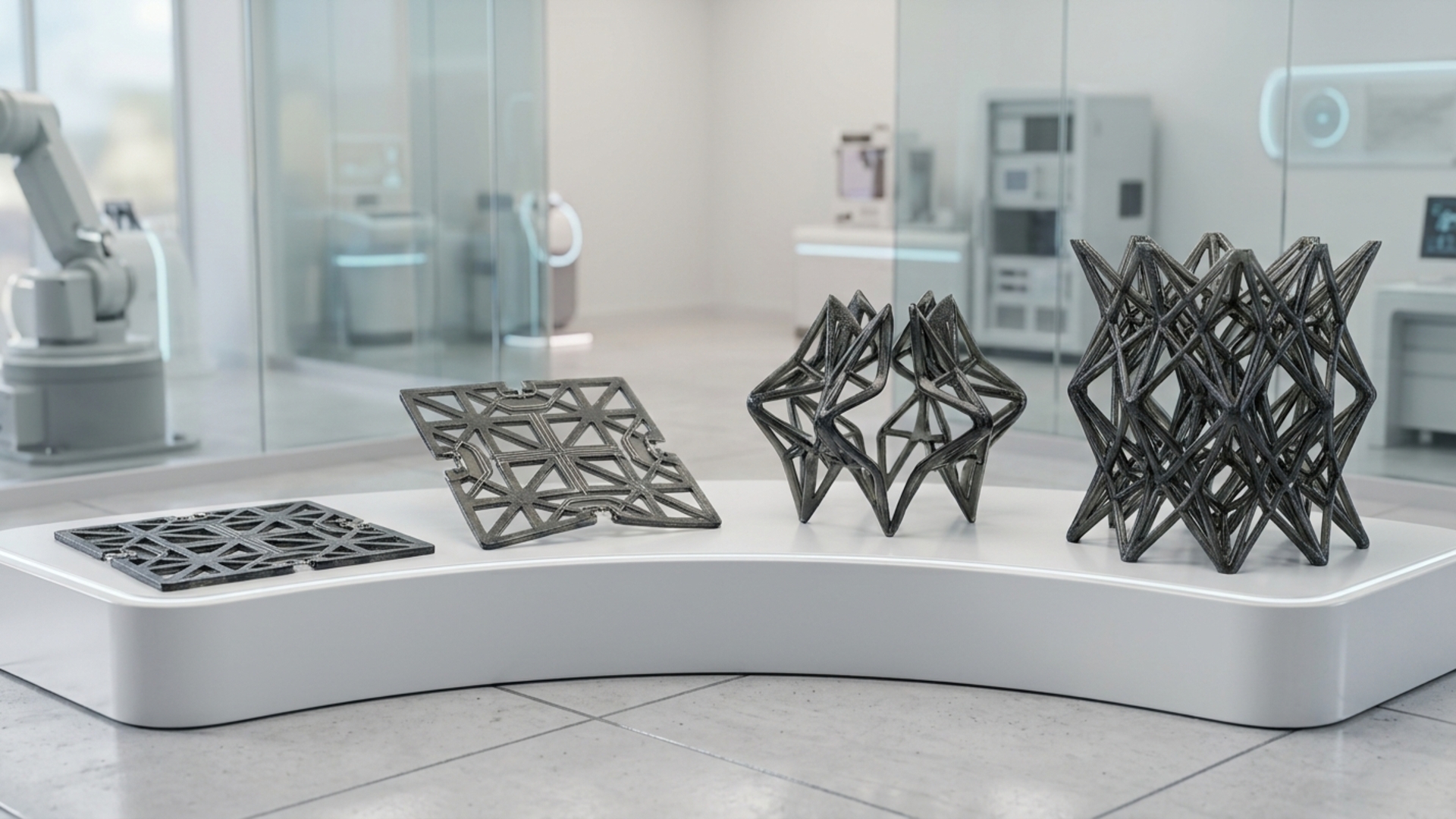
‘Under programmed numerical control the beams could produce any number of duplicated items once the design had been optimized – silent, one-step, infinitely flexible mass production!’ declares chemist David Jones, aka Daedalus, creator of DREADCO in the earliest known description of what we might achieve if we could print things, rather than merely talking about them. 3D printing was not his most outlandish idea (he also proposed a space elevator), but it may well be the most valuable. And it really has changed the world.
We now print cars and even houses, bringing Daedalus’s vision of infinitely flexible manufacturing to life. But what he could not have imagined was that it would also lead to the development of novel ways to harness the potential of more traditional materials
It’s actually very straightforward. One common approach, including by Annela Seddon, a materials chemist at the University of Bristol, is to force a particular material, usually a curable plastic resin, out of a valve in a certain pattern and let it set. ‘We print a layer, then we print a layer on top, then another layer on top, and that gives us a 3D structure,’ she says. Varying the material allows varying the properties. For some applications, natural materials are better: gelatine, cellulose and alginate, a seaweed derivative. They are also much more challenging to work with. ‘Every time you develop a new soft material to print, you have to do a whole load of testing to find out whether it can be printed,’ Annela notes. ‘Not only do they have to be extrudable to print, they also have to not be liquid, or they will run out of the nozzle.’
Adding living cells turns these printing materials into bioinks. This allows creating tissues. ‘What appears in the first instance is a type of jelly with isolated cells,’ notes Brian Derby, of the Henry Royce Institute, UK’s National Institute for Advanced Materials Research and Innovation at the University of Manchester. They secrete proteins, resulting in a matrix similar to that which holds cells together in the body. ‘You end up with something people refer to as proto-tissue that can exist on its own.’
Ultimately, the goal is to print organs, to test drugs on them, and replace failing ones, thus cutting down the enormous waiting lists for transplants. ‘Skin is an organ but I don’t think anyone has printed skin with hair follicles and sweat glands,’ notes Brian. There have, however, been successes announced this year, including a non-beating heart. It will probably be another two decades or so before we can print beating hearts, or kidneys, or anything else, and transplant them into animals.
The challenge of putting stuff into living bodies and making sure they adapt to them might also be addressed in other ways. Other printed items, such as prostheses, also need to change as their surroundings, such as patients, change. Such adaptation can be engineered. ‘What [many scientists have] done is create something that can change with time,’ says Annela. ‘Normally you print and it stays that way, but what we have is a material that waits and then changes when triggered.’
There are various ways to do this. ‘The material is in a particular state until it is acted on by a specific stimulus and it responds to that stimulus by changing,’ she explains. The stimulus can be heat, water, lasers, electricity, or even a period of time. Once it happens, the printed item, such as a structure made out of the bioink, begins to change.
It turns out that how it is prepared is much more important than the material itself. ‘Think about a human being, for instance. You have skin, you have bones, you have hair, you have organs. Look at the elements that they’re made from; it’s a very small number. Mainly carbon, hydrogen, nitrogen, oxygen. Things like skin, the fact that they’re elastic is down to structure, not to the elements.’ The easiest way to think about structure is to imagine the pine cone, which is made from cellulose. ‘The cellulose fibers in the pine cone are all aligned in the same direction,’ Annela explains, ‘so that when the pine cone takes in water the cellulose swells and, because it’s aligned in one direction, the pine cone opens. And then when they dehydrate, the pine cone closes.’
This means that if scientists can control the alignment of their 3D material and then stimulate it, they can control the direction in which it will change. In other words, the difference between the pine cone and the 4D-printed, lab-grown tissues is that the change is programmed to happen, rather than it simply happening. Because of this, 4D-printed materials are sometimes also referred to as programmable, which is important if we want to know how a particular 4D-printed implant will behave in the body. It’s all very promising.
Programmable 4D Printing Technology Market is already changing lives. One area in which doctors badly need innovation is plumbing. Humans have lots of plumbing in the form of the windpipe and bronchial tubes, blood vessels, esophagus, the ureters, and the intestines. Pipes and tubes are everywhere, and they often become faulty. Sometimes they narrow, and sometimes they collapse, but either way passage of air or liquid through them is compromised and needs to be restored, if possible. The usual solution is the stent, a somewhat smaller artificial tube that is placed inside the malfunctioning one in order to help it do its job. Stents can be exceptionally challenging to insert, especially if the tube is small or otherwise inaccessible, and such procedures often include several high-risk surgeries to both insert and later remove the stent.
The 4D Printing Technology alternative to the stent is the splint. If you’ve ever broken a bone, you know the splint as a support to which the broken bone is tied, helping it heal. Similarly, a 4D-printed splint can help with narrower or collapsing tubes. If you are a baby whose windpipe tubes, tasked with transporting air from the windpipe to the lungs, are weak, you may have tracheobronchomalacia. This can cause you to suffocate unless you have surgery to widen them. That was the condition that Kaiba Gionfriddo was born with in 2012, but he survived thanks to a team of doctors and scientists at the University of Michigan who printed a special splint to keep his airways open. Annela Seddon, a member of that team, notes that the splint is designed to allow his windpipe to heal, strengthen, and eventually function on its own. Once that happens, the splint will be able to self-dissolve and resorb back into his body, leaving him with healthy, functioning airways. Several other children have had similar procedures, and all of them are doing well.
The future for 3D printing in medicine looks bright. Even if soft materials are proving to be more challenging than plastics, and even if we have not yet moved from proto-tissues to organs, the race has begun. ‘Replacement organs, it’s in our lifetime,’ claimed Erik Gatenholm, founder of the bioprinting company Cellink, to The Guardian in 2017. Whether or not he is right, the development of simpler tissues, such as skin or cartilage, seems inevitable, as do an increasing number of different implants to help our bodies to heal, such as the 4D-printed windpipe splint that saved Kaiba’s life. What remains to be discovered is what will come next, and whose life it will save.
4D printing represents an exciting development in the evolution of 3D printing, particularly in healthcare. By creating materials that can respond and adapt to their surroundings, this technology could lead to more effective implants, improved treatments, and new possibilities for regenerative medicine. As research continues, 4D printing may become an increasingly important part of the future of healthcare and advanced manufacturing. If you are interested in exploring High-Quality and Customizable Solutions and innovative 3D printing possibilities for your project, get in touch with our team to discuss your requirements.
