

Discover the Creativity of the Future: Use 3D Printing to Bring Your Ideas to Life
Suite 20-01 & 20-02B, Level 20 The Pinnacle, Persiaran Lagoon, Bandar Sunway, 47500 Subang Jaya, Selangor, Malaysia
hello@custommetal3dprinting.com
+60 124838830
3D printing has transformed the way prototypes and functional parts are designed and manufactured. By selecting the right printing technology and material, businesses and individuals can achieve the desired strength, flexibility, durability, and appearance for their projects. Whether you require a 3D Plastic Printing Service for rapid prototyping or end-use production, understanding the available materials is the first step toward successful printing.
Table of Contents:
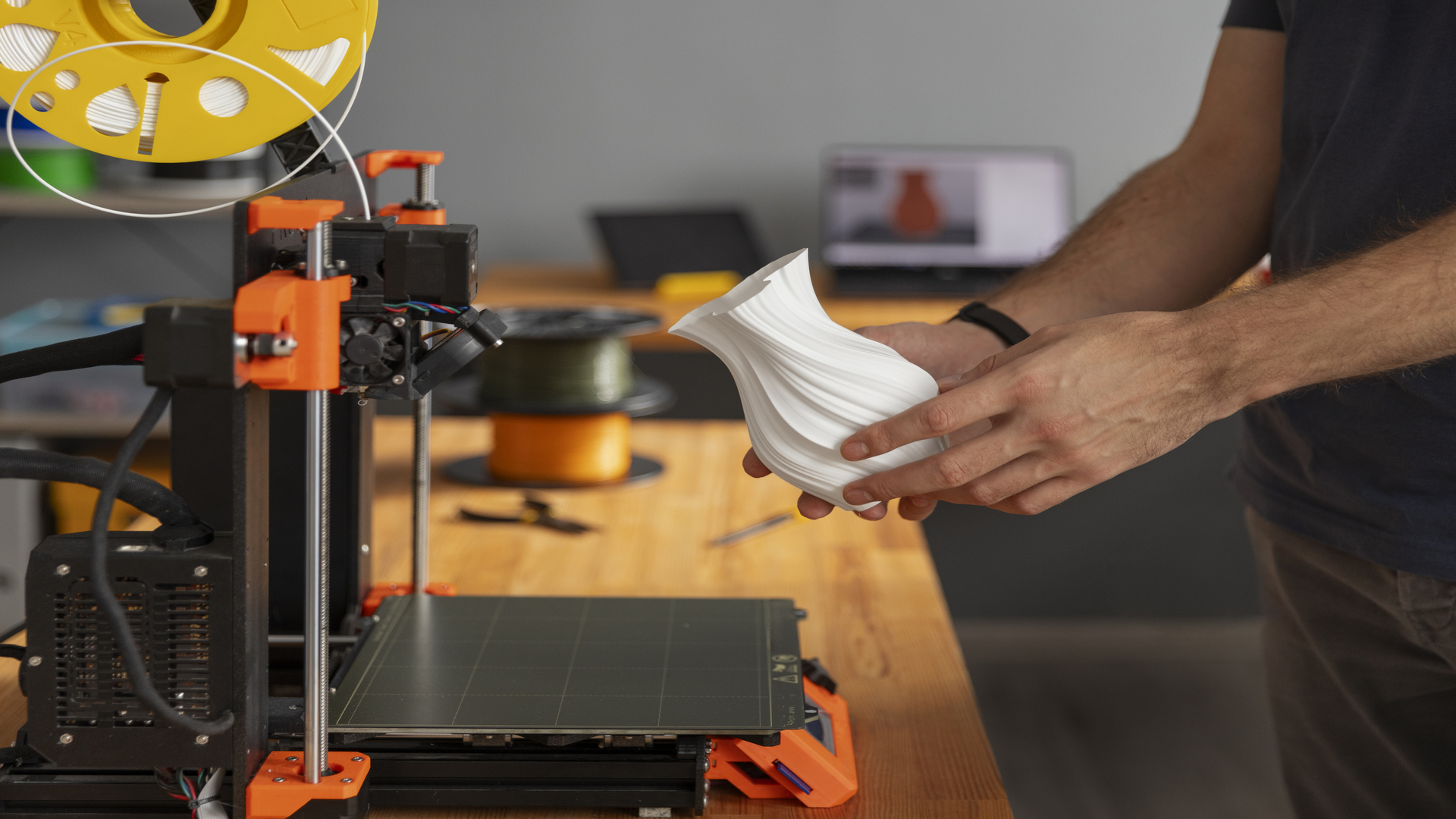
Plastic remains the most widely used material in additive manufacturing due to its affordability, versatility, and ease of processing. Different plastics possess unique mechanical and thermal properties, making them suitable for various industrial and consumer applications.
Plastic materials are generally divided into two categories:
Thermoplastics can be repeatedly melted and reshaped without permanently changing their chemical structure. This makes them suitable for recycling and most common 3D printing applications.
Thermosetting plastics, also known as thermosets, permanently harden after curing with heat or light. Once cured, they cannot be melted or reshaped, making them ideal for applications requiring excellent dimensional stability and durability.
The three primary plastic 3D printing technologies include:
Each technology offers different advantages depending on the required accuracy, strength, and surface finish.
Fused Deposition Modeling (FDM) is the most widely used and affordable 3D printing technology. It is commonly used for concept models, functional prototypes, and educational projects. Although FDM produces durable parts at a relatively low cost, it generally provides lower accuracy and rougher surface finishes than SLA or SLS printing.
FDM also offers a wide variety of coloured and specialty filaments, allowing 3D Printing For Plastic applications to produce prototypes that closely resemble finished products.
ABS is a strong and impact-resistant material suitable for functional prototypes and engineering applications.
PLA is biodegradable, easy to print, and ideal for concept models and visual prototypes.
PETG offers excellent chemical resistance, moisture resistance, and durability, making it suitable for waterproof applications.
Nylon provides outstanding strength, flexibility, and wear resistance for functional mechanical components.
TPU is a flexible material commonly used for rubber-like parts that require shock absorption or vibration damping.
PVA and HIPS are primarily used as soluble support materials during complex printing jobs, while carbon fibre, Kevlar, and fiberglass composites provide additional rigidity for industrial applications.
Stereolithography (SLA) produces parts with exceptional detail, smooth surface finishes, and high dimensional accuracy. It is widely used for engineering prototypes, moulds, medical devices, jewellery, and product presentation models.
Because SLA parts are produced from liquid resin, they exhibit consistent mechanical properties throughout the printed component, making them suitable for precision applications.
General-purpose resins are commonly used for concept models and visual prototypes.
Clear resin produces highly transparent parts suitable for optical applications.
Fast Model Resin enables rapid production during product development.
Colour resin allows manufacturers to produce parts in customised colours.
Engineering resins provide higher strength, heat resistance, and durability for functional testing.
Flexible and silicone resins simulate rubber-like materials used in medical devices, consumer products, and soft components.
Specialised resins are also available for dental appliances, jewellery casting, electronics, flame-retardant applications, and ceramic components requiring high thermal resistance.
Selective Laser Sintering (SLS) is widely used by engineers and manufacturers to produce strong, functional parts without requiring support structures. The powder surrounding the printed part naturally supports complex geometries, making SLS ideal for intricate designs and low-volume manufacturing.
Compared with FDM, SLS produces stronger components with better mechanical performance and no visible layer lines after finishing.
Nylon 12 is the most commonly used SLS material because of its excellent durability, chemical resistance, and dimensional stability.
Nylon 11 provides greater flexibility and impact resistance than Nylon 12, making it suitable for parts exposed to repeated stress.
Glass-filled and carbon-filled nylon composites increase stiffness and structural strength for demanding industrial applications.
TPU allows manufacturers to create flexible, rubber-like components with excellent shock absorption and elasticity.
Each printing technology has strengths depending on the intended application.
FDM is the most economical option for hobbyists, educational use, and simple prototypes. SLA offers the highest resolution and smoothest surface finish, making it suitable for detailed models and professional prototypes. SLS is best suited for manufacturing strong functional parts, complex geometries, and custom production without support structures.
In addition to plastics, metal 3D printing is widely used in aerospace, automotive, healthcare, and industrial manufacturing.
Metal FDM creates parts by extruding metal-filled materials that are later sintered in a furnace.
Selective Laser Melting (SLM) and Direct Metal Laser Sintering (DMLS) fuse fine metal powders using lasers to manufacture high-strength components with complex internal geometries.
Common metal materials include titanium, stainless steel, aluminium, tool steel, and nickel alloys, each selected according to the required mechanical properties and operating environment.
For companies seeking more affordable alternatives, plastic prototypes can be produced first before metal casting or electroplating, reducing production costs while maintaining design flexibility.
Selecting the correct material depends on the intended application and performance requirements.
Determine whether the printed part is intended for concept modelling, functional testing, or long-term production. Higher-performance applications generally require stronger engineering materials.
Consider important properties such as tensile strength, flexibility, impact resistance, heat resistance, hardness, chemical resistance, and wear resistance. Matching these characteristics to your project ensures reliable performance.
After narrowing down the required properties, compare the available materials based on cost, durability, print quality, and manufacturing efficiency before making the final selection.
Plastic 3D printing offers a wide variety of materials and technologies suitable for everything from simple prototypes to industrial manufacturing. Understanding the strengths of FDM, SLA, and SLS printing allows businesses and individuals to choose the most appropriate solution based on performance, accuracy, and budget. Whether you are searching for 3D Printing Nearby or professional Plastic 3D Printing Services in Malaysia, reach out to us to selecting the right material and printing process is essential to producing high-quality, reliable parts for your project.
