

Discover the Creativity of the Future: Use 3D Printing to Bring Your Ideas to Life
Suite 20-01 & 20-02B, Level 20 The Pinnacle, Persiaran Lagoon, Bandar Sunway, 47500 Subang Jaya, Selangor, Malaysia
hello@custommetal3dprinting.com
+60 124838830
Enterprises from different industries use 3D Printing Technologies as an additive manufacturing technique to print consumer and industrial products from a digital model. The 3D printers print three-dimensional objects and structures from three-dimensional computer-aided design (CAD). The manufacturers use a variety of 3D printers to print consumer and industrial products. The 3D printers differ from each other based on the underlying 3D printing technology. Every 3D printer uses a specific 3D printing technology to produce an object. Hence, the manufacturers can choose the best 3D printing technology to print an object by understanding the 12 different types of 3D printing technology.
Table of Contents:
Businesses searching for 3D Printing Services, 3D Printing Services Nearby, and 3D Printing Nearby can benefit from understanding these technologies to choose the most suitable manufacturing solution.
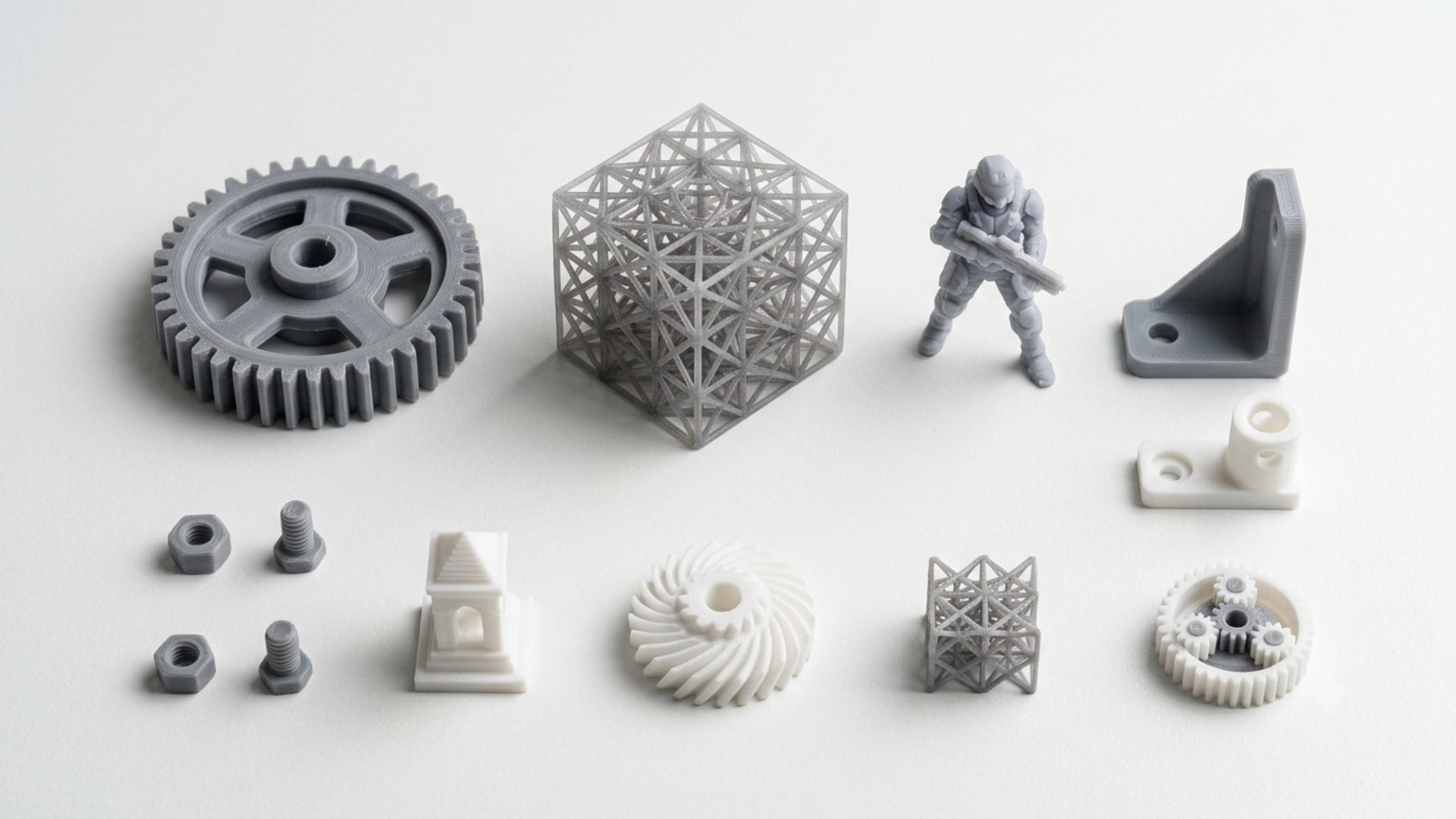
SLA 3D printing technology was one of the first 3D printing technologies that produced objects, structures, and prototypes in a similar way as SLA printers. Unlike SLA printers, SLA creates three-dimensional objects by exposing photosensitive liquid resin to a UV laser beam. The printing service providers need to use a digital projector to produce an object by curing and hardening the liquid resin. However, SLA is a relatively simple 3D printing technology that involves depositing one layer of material at a time. Compared to other advanced 3D printing technologies, SLA 3D printing technology is slower.
The consumer 3D printers use FDM 3D printing technology as a form of desktop 3D printing technology. The 3D printers that use FDM printing technology have a control system and a platform extrusion nozzle. The extrusion nozzle is used to load the spool of filament into the 3D printer. The printing service providers heat the nozzle to a certain temperature and extrude the filament into the printer using a motor. The heated nozzle melts the filament, and the 3D printer prints a three-dimensional object by extruding the molten material on a build platform. The 3D printer lays down another layer of filament on the first layer of filament when it has solidified.
The 3D printing technology that uses a digital light projector is similar to the stereolithography (SLA) printing technology. However, unlike the SLA printing technology, the DLP 3D printing technology uses a digital light projector to cure and harden the liquid resin to produce three-dimensional objects. The digital projector has a digital screen that displays images of layers as pixels. Hence, the digital light projector creates voxels – blocks of pixels – by displaying images of layers. The 3D printing technology uses a UV light or LED screen to cure the liquid resin. A Digital Micromirror Device (DMD) – a set of micro-mirrors – directs the light to the build platform and controls the image projection.
The SLS 3D printing technology produces three-dimensional objects from nylon, polyamide, and other sintered materials by using lasers as the main power source. The laser beam sinters the powdered material to form a solid object based on the computer-aided design (CAD). The excess powder material that does not fuse with the laser beam forms a support structure for the printed object. Hence, unlike some of the 3D printing technologies, the SLS 3D printing technology does not require an external support structure to print complex geometry. The SLS 3D printing technology is widely used to produce end-use parts with complex functionalities.
SLM 3D printing technology uses high power-density lasers to produce prototypes and industrial products from powdered metal. The high power-density laser melts the metal powder to create a three-dimensional structure. However, the 3D printer melts and fuses the metal layer at a time to form the final product. Therefore, the SLM 3D printing technology works in a similar principle as the SLS 3D printing technology. However, the SLM 3D printing technology can melt the metal powder to produce parts with higher accuracy compared to the SLS 3D printing technology. In addition to melting the metal powder, the SLM 3D printing technology can also fuse the metal powder. Unlike the SLS 3D printing technology, the SLM 3D printing technology does not require any support structure to produce a three-dimensional object.
LOM is a traditional 3D printing technology that facilitates rapid prototyping by laminating or fusing layers of paper or plastic to produce three-dimensional objects. The 3D printing technology uses heat and pressure to fuse layers of paper or plastic to produce prototypes. The 3D printer uses a computer-controlled laser or knife to cut the fused layers of paper or plastic into the desired shape. Currently, the LOM 3D printing technology is not widely used for manufacturing purposes. However, many enterprises use the LOM 3D printing technology as a rapid and low-cost 3D printing technology to produce prototypes.
Like the SLM 3D printing technology, the EBM 3D printing technology also melts metal powders to produce three-dimensional metal objects. However, the EBM 3D printing technology melts the metal powder using high energy beams or electrons. In addition to melting the metal powder, the electrons in the EBM 3D printing technology fuse the metal powder seamlessly. The high energy density of the electron beam makes the EBM 3D printing technology faster compared to some of the 3D printing technologies. However, the 3D printing technology requires a vacuum environment to fabricate three-dimensional metal objects. In addition to fabricating three-dimensional metal objects, the EBM 3D printing technology can also use conductive materials to manufacture objects.
Material jetting (MJ) 3D printing technology is considered to be a relatively faster and accurate 3D printing technology than the other 3D printing technologies. Currently, the manufacturers widely use the MJ 3D printing technology to produce realistic prototypes. The MJ 3D printing technology works in a similar principle as the 2D printing technology. The 3D printing technology uses photopolymer resin and UV light to create solid objects and structures. The printing service providers use a printer to jet the photopolymer resin in the form of droplets and cure the droplets using UV light. However, the MJ 3D printing technology keeps on jetting layers of photopolymer resin until the 3D printing process is complete.
MBJ is a low-cost metal 3D printing technology that is widely used by manufacturers to produce three-dimensional metal objects. The 3D printing technology uses a polymer binding agent to bind metal powder to form a solid object. The MBJ 3D printing technology uses the polymer binding agent to bind layers of metal powder according to the computer-aided design (CAD). The metal powder is then cured to form a solid object. Unlike traditional manufacturing processes, the MBJ 3D printing technology allows the manufacturers to print complex geometries.
The low-cost 3D printing technology produces three-dimensional objects and structures from gypsum, sandstone, and other sands. Many manufacturers use the SBJ 3D printing technology to fabricate parts from plaster-based powder. Similar to the MBJ 3D printing technology, the SBJ 3D printing technology also uses a polymer binding agent to bind the sand material. However, the SBJ 3D printing technology uses multiple printheads to print full-color models. The primary printhead jets the polymer binding agent, while the secondary printhead applies the color inks to the model. Hence, the 3D printer produces three-dimensional models in color.
The 3D printing technology produces three-dimensional models from wax droplets or photopolymer by selectively depositing the material onto a build plate. The 3D printing technology deposits the material in the form of droplets that are then cured on a build plate. The droplets of the material can be easily cured by exposing them to light. Hence, the 3D printer deposits one layer of material at a time until the 3D printing process is complete. The 3D printer uses a pair of inkjets to print the three-dimensional model. The first inkjet deposits the material droplets on the build plate, while the second inkjet removes the support material.
The 3D printing technology produces three-dimensional objects and structures directly from metal. The 3D printers that use the DMLS printing technology print metal objects from metal powder. The 3D printing technology uses a high-power laser to melt and fuse multiple layers of metal powder to form a solid structure. The 3D printers print support structures on a base plate before printing the three-dimensional objects. During the 3D printing process, the laser beam is directed onto the bed of metal powder under the computer’s control. Many manufacturers prefer the DMLS 3D printing technology to print complex structures and geometries without using wrought iron.
Get in touch with our experts today for more information about 3D Printing Services we offer.
