

Discover the Creativity of the Future: Use 3D Printing to Bring Your Ideas to Life
Suite 20-01 & 20-02B, Level 20 The Pinnacle, Persiaran Lagoon, Bandar Sunway, 47500 Subang Jaya, Selangor, Malaysia
hello@custommetal3dprinting.com
+60 124838830
3D printing continues to gain traction across industries, from small enterprises to global corporations. If your business hasn’t yet explored its potential, the following real-world examples may offer valuable insight.
Table of Contents:
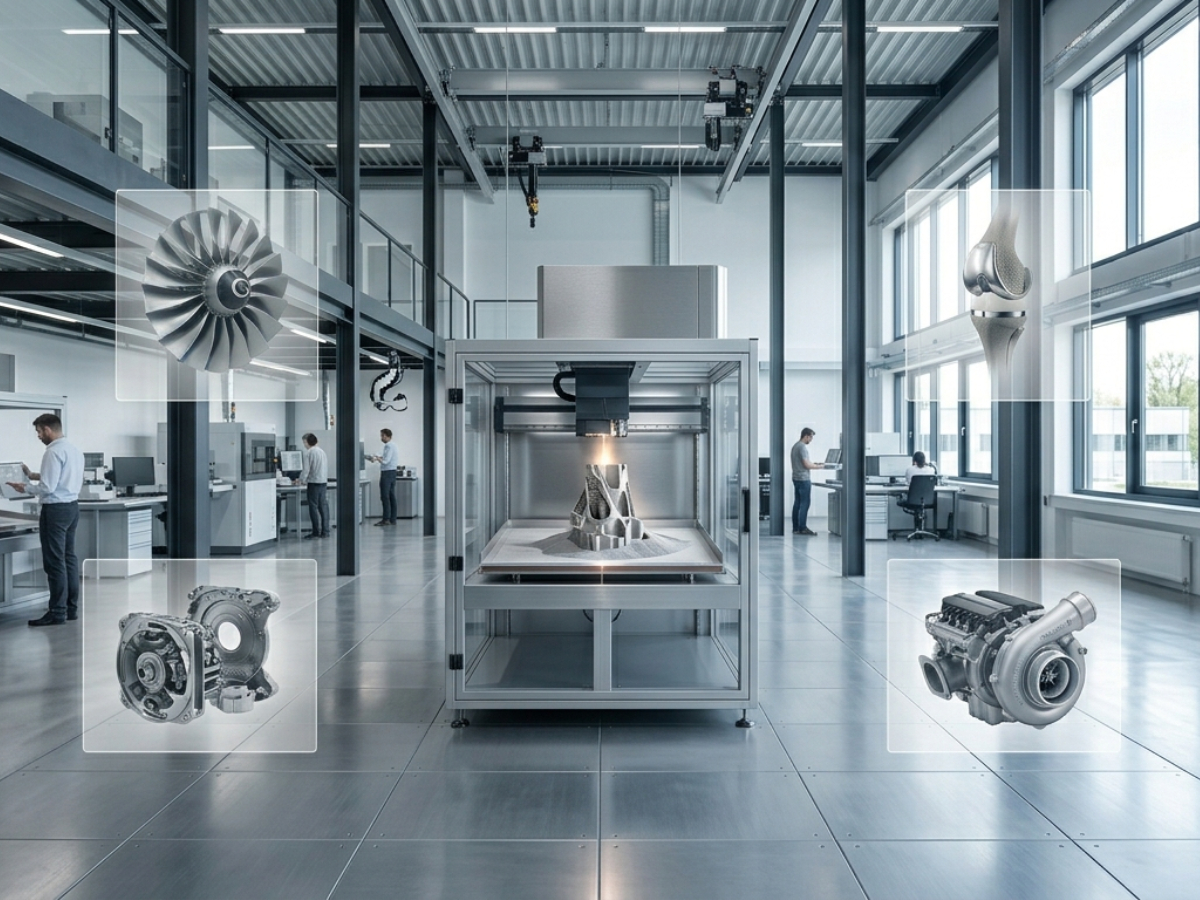
3D Printing Service is a process that produces physical, three-dimensional objects. First introduced in 1984 by American inventor Charles Hull, it began with stereolithography (SLA), a method that constructs models layer by layer. Today, more than a dozen different 3D Printed Objects techniques exist. The choice of method depends on factors such as model complexity, required material, production timeline, and final application. Common techniques include FDM (fused deposition modeling), SLS (selective laser sintering of powdered materials), SLA (using light-curable resin), DMLS (direct metal laser sintering for small-scale metal parts), and PolyJet (ideal for highly detailed resin-based models).
A 3D printer can fabricate components in diverse shapes and sizes using various materials, serving multiple industrial needs—ranging from prototyping and metrology to limited-run manufacturing and equipment maintenance.
One of the most widespread uses of 3D Printing Full Color is rapid prototyping. With a properly formatted STL file, businesses can quickly produce multiple design iterations in different materials, allowing for practical testing and refinement before finalizing a product.
Using high-performance materials like carbon-fiber-reinforced PEEK, it’s possible to manufacture parts with mechanical strength comparable to metal. In some cases, these printed components even replace traditional metal ones. Metal powder printing is also emerging, enabling complex geometries unachievable through conventional methods. However, this technique remains costly and under development due to health concerns related to fumes during printing.
Printers vary in build volume, allowing both small and large parts to be produced. For oversized components, post-processing techniques enable multiple printed sections to be assembled into a single, larger unit—such as a propeller or structural element.
Robotic 3D Printing has applications in virtually every sector. If it isn’t currently used in a particular field, it’s likely due to a lack of innovation rather than technical limitations. Over time, adoption is expected to become universal.
The medical field is embracing 3D printing at a rapid pace, offering new solutions that enhance patient care. Applications include custom prosthetics, orthotics, radiation therapy aids, and even experimental drug and tissue printing. Research into printing organs and skin is ongoing, and surgical simulation models are already in use. While some applications seem futuristic, they may soon become standard practice.
In orthopedics, 3D Printing Industry supports amputees, particularly those needing lower-limb prostheses. A critical part—the socket—is designed using 3D scanning and digital modeling, then produced via 3D printing. This ensures a precise, comfortable fit tailored to the individual. Materials range from PET-G, PP, and ABS for trial sockets to PA-6 and PA-12 for final versions. This approach reduces production time from weeks to just days while improving patient outcomes.
Beyond prosthetics, 3D printing creates anatomical models of hands, skulls, or legs to produce personalized orthoses—protective supports used post-surgery. Traditional methods using plaster molds take up to two weeks; 3D printing shortens this to a single day.
In cancer treatment, 3D printing produces boluses—devices that help distribute radiation evenly by mimicking tissue density. Typically made from PLA or ABS, these are modeled from CT scans and converted into printable STL files. The main challenge lies in ensuring consistent internal structure, which requires precise software settings and layered printing strategies.
The aerospace industry increasingly relies on 3D printing. Boeing, for example, estimates millions in savings per aircraft. While initially used for prototypes, the technology now produces end-use parts like fuel nozzles. It also supports maintenance, tooling, and cabin component manufacturing—such as seat parts and tables. Lightweight, durable materials are selected to meet aviation demands, contributing to improved fuel efficiency and performance.
Industry Across industrial sectors, 3D printing supports prototyping and small-batch production. The wide availability of materials allows for quick testing and optimization. Production timelines can be cut by tens of percent, reducing costs. The technology also offers greater autonomy—parts can be made on-demand, minimizing reliance on external suppliers. Even intricate designs are achievable, supporting innovation and operational continuity.
Using SolidWorks and FDM technology, we developed a feeder component that reduced machine operating costs by 40%. The part, printed in biocompatible PEEK filament on a VSHAPER 500 PRO, ensures food-safe operation and enables efficient remanufacturing of industrial equipment.
A glue-dispensing nozzle used in automotive assembly was originally made of metal but degraded due to high temperatures and corrosive adhesives. Switching to PEEK filament eliminated the issue and lowered production costs.
Grippers used in automated production lines benefit from 3D printing, which makes them faster and cheaper to produce. Complex shapes, impossible with traditional methods, can now be realized, enhancing responsiveness in Industry 4.0 environments.
In automotive manufacturing, 3D printing is gradually replacing CNC machining, which is more complex, time-consuming, and harder to staff for. It also addresses supply chain disruptions caused by global events like pandemics or conflicts. By producing tools, fixtures, and components in-house, companies reduce dependency on external suppliers, streamline operations, and cut costs. One major automaker has already implemented this approach, achieving a fast return on investment. Hybrid methods—combining 3D-printed and CNC-machined parts—are also being adopted.
Selecting a printer depends on the part’s complexity, required material, build volume, and environmental conditions such as nozzle and chamber temperature. These factors also influence production speed and method choice.
The market offers a broad range of filaments, with specific grades certified for medical or industrial use—like PEEK for implants. Choosing the right material requires evaluating desired properties such as strength, flexibility, or heat resistance.
If you’re unsure whether 3D printing fits your needs, consider reaching out to us. It allows you to test the technology quickly, assessing its speed, adaptability, and output quality without upfront investment in equipment.
