

Discover the Creativity of the Future: Use 3D Printing to Bring Your Ideas to Life
Suite 20-01 & 20-02B, Level 20 The Pinnacle, Persiaran Lagoon, Bandar Sunway, 47500 Subang Jaya, Selangor, Malaysia
hello@custommetal3dprinting.com
+60 124838830
3D metal printing has moved beyond the experimental phase and is now a core part of Aerospace 3D Metal Printing manufacturing. Companies across the industry are using additive manufacturing to produce certified, flight-qualified components that meet rigorous standards for strength, weight, and durability. Whether for engine systems or structural supports, this technology enables faster production cycles, less material waste, and intricate designs unachievable through conventional methods.
Table of Contents:
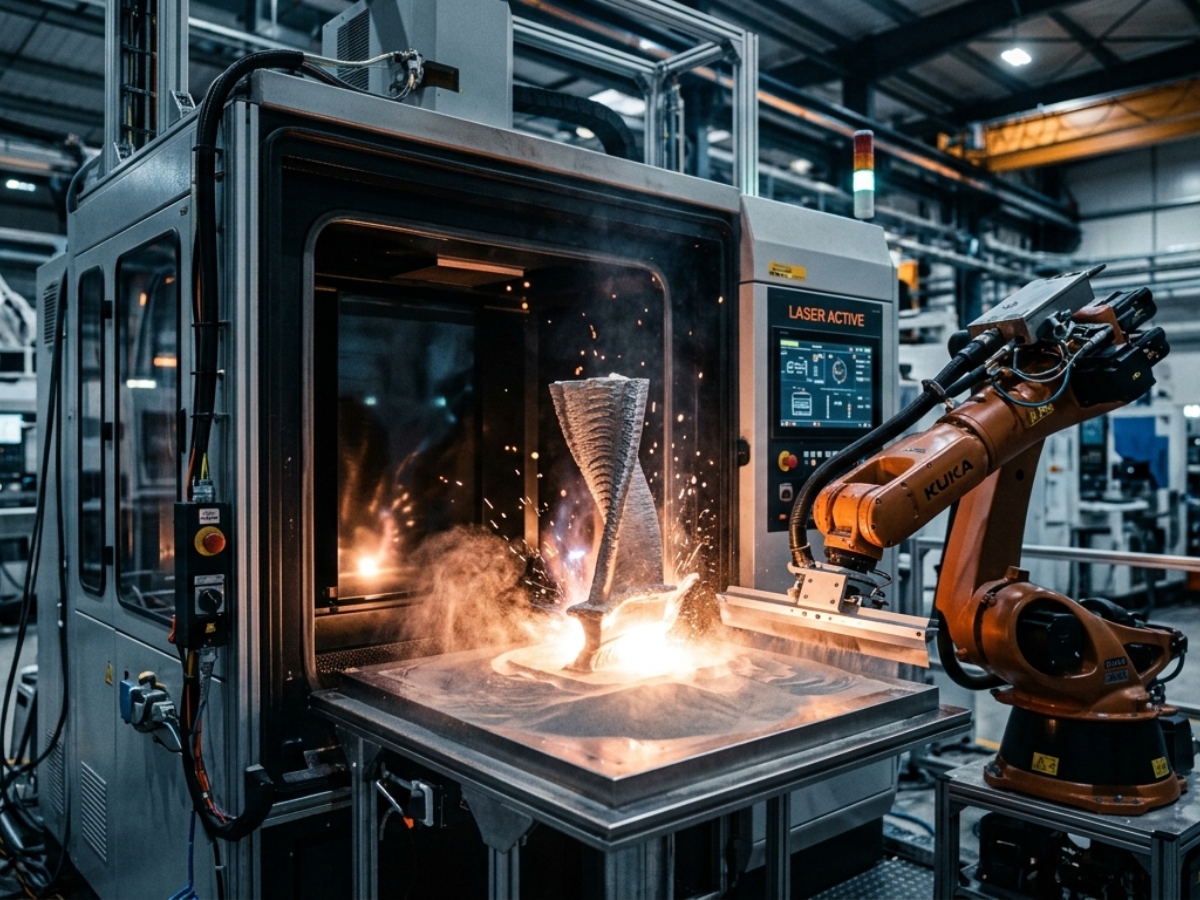
In aviation and space travel, even small reductions in weight have major impacts. Traditionally, parts were assembled from multiple pieces using welding or fasteners. Today’s manufacturing prioritizes lightweight, integrated components that can be developed in weeks without sacrificing structural integrity.
Lighter parts not only improve fuel efficiency but also streamline production. This means designs can be realized and deployed more quickly, accelerating time to flight.
Metal 3D printing is more than an innovative tool—it represents a significant advancement for the 3D Printing for Aerospace sector. Consider turbine parts, which must endure extreme temperatures and mechanical stress. Conventional production of these high-cost components often involves long lead times and financial risk. With additive manufacturing, engines can be made lighter, more fuel-efficient, and longer-lasting. For example, advanced materials like the “Superalloy” developed at Sandia National Laboratories offer superior heat resistance, enabling engines to operate at higher performance levels.
Large components, such as those made from nickel alloys, can be printed as single units, significantly reducing weight and assembly time. What once took many months can now be completed in a fraction of the time. Beyond cost savings, this process supports sustainability goals—critical in an industry where every gram affects efficiency.
In space, resupplying parts isn’t feasible. Instead, on-demand manufacturing becomes essential. Projects like the European Space Agency’s Metal3D have demonstrated successful 3D printing under microgravity. Similarly, NASA’s in-orbit additive manufacturing capability—essentially a “machine shop in space”—highlights the strategic value of producing tools and components remotely.
Weight directly influences both performance and operating costs. By adopting metal 3D printing, companies can minimize use of expensive materials like titanium and Inconel, reduce part count, simplify assembly, and cut down on inventory. These improvements translate into real financial benefits across the supply chain.
Engineers value the design flexibility offered by additive manufacturing. It allows for optimized, topology-driven structures that are both lighter and stronger, tailored specifically for high-stress environments found in flight and space applications.
Safety is paramount in Aerospace 3D Printing Market. Every component must perform reliably under extreme conditions—whether at 30,000 feet or in the vacuum of space. There is zero tolerance for failure.Metal 3D printing supports this reliability through consistent quality, scalability, and precision. Using aerospace-grade materials such as titanium alloy or Inconel 625, parts can withstand intense heat, vibration, and pressure. The process also minimizes microscopic flaws that could lead to structural failure, ensuring components remain dependable in critical operations.
What began as a prototype technology has become a mainstream manufacturing solution. The focus is no longer on whether metal 3D printing works—but how quickly it can be scaled. Industry leaders like SpaceX and Boeing are investing heavily in additive manufacturing to produce everything from fuel injectors to satellite components.
The implications extend far beyond faster repairs or spare parts. This technology is enabling next-generation flight, from commercial air travel to deep-space missions, with fully customized, mission-specific hardware.
1. What is metal 3D printing in aerospace?
It’s an additive process that builds aerospace components layer by layer using high-performance metals such as titanium and Inconel.
2. Why is weight important in aerospace manufacturing?
Reducing weight improves fuel efficiency, lowers emissions, and enhances overall aircraft performance.
3. How does metal 3D printing shorten production timelines?
It removes the need for molds, tooling, and multi-step casting, allowing parts to be produced in weeks instead of months.
4. Which metals are commonly used in aerospace 3D printing?
Titanium alloys, Inconel superalloys, and aluminum are among the most widely used materials.
5. Is 3D printing cost-effective for aerospace?
Yes. It reduces material waste, cuts assembly requirements, and lowers inventory and logistics costs.
6. How reliable are 3D-printed aerospace components?
These parts undergo strict testing and are engineered to endure extreme environmental conditions, including heat, pressure, and vibration.
7. Can 3D printing be done in space?
Yes. Successful tests have shown that functional parts can be printed in microgravity environments.
8. What are the main benefits of Component 3D Printing in Aerospace for aerospace firms?
Key advantages include reduced costs, faster development, greater design flexibility, and lower environmental impact.
9. Are 3D-printed aerospace parts currently in use?
Yes. Companies like Boeing and SpaceX already use 3D-printed components in operational aircraft and spacecraft.
10. How does FormAlloy support aerospace innovation?
Our advanced DED systems empower aerospace manufacturers to produce high-performance parts efficiently and scale their innovation efforts.
Thinking about a new project. Or just curious how metal 3D printing might change your aerospace production. We are ready to support your move forward without hesitation. Since you’re designing lighter parts, since you aim for better fuel use, even when testing intricate shapes – our knowledge matches the tools needed to make it real.
