

Discover the Creativity of the Future: Use 3D Printing to Bring Your Ideas to Life
Suite 20-01 & 20-02B, Level 20 The Pinnacle, Persiaran Lagoon, Bandar Sunway, 47500 Subang Jaya, Selangor, Malaysia
hello@custommetal3dprinting.com
+60 124838830
Step into the evolving world of 3D Jewelry Printing making—a space where innovation meets artistry. This technology has transformed how intricate and beautiful pieces are designed and produced. By combining traditional craftsmanship with modern digital tools, 3D printing enables greater creative freedom, customization, and environmental responsibility. This article explores how 3D printing is reshaping the jewelry industry, focusing on its impact on design, personalization, materials, sustainability, and production efficiency. Let’s explore how this advancement is redefining jewelry creation and why it matters to designers, makers, and wearers alike.
Table of Contents:
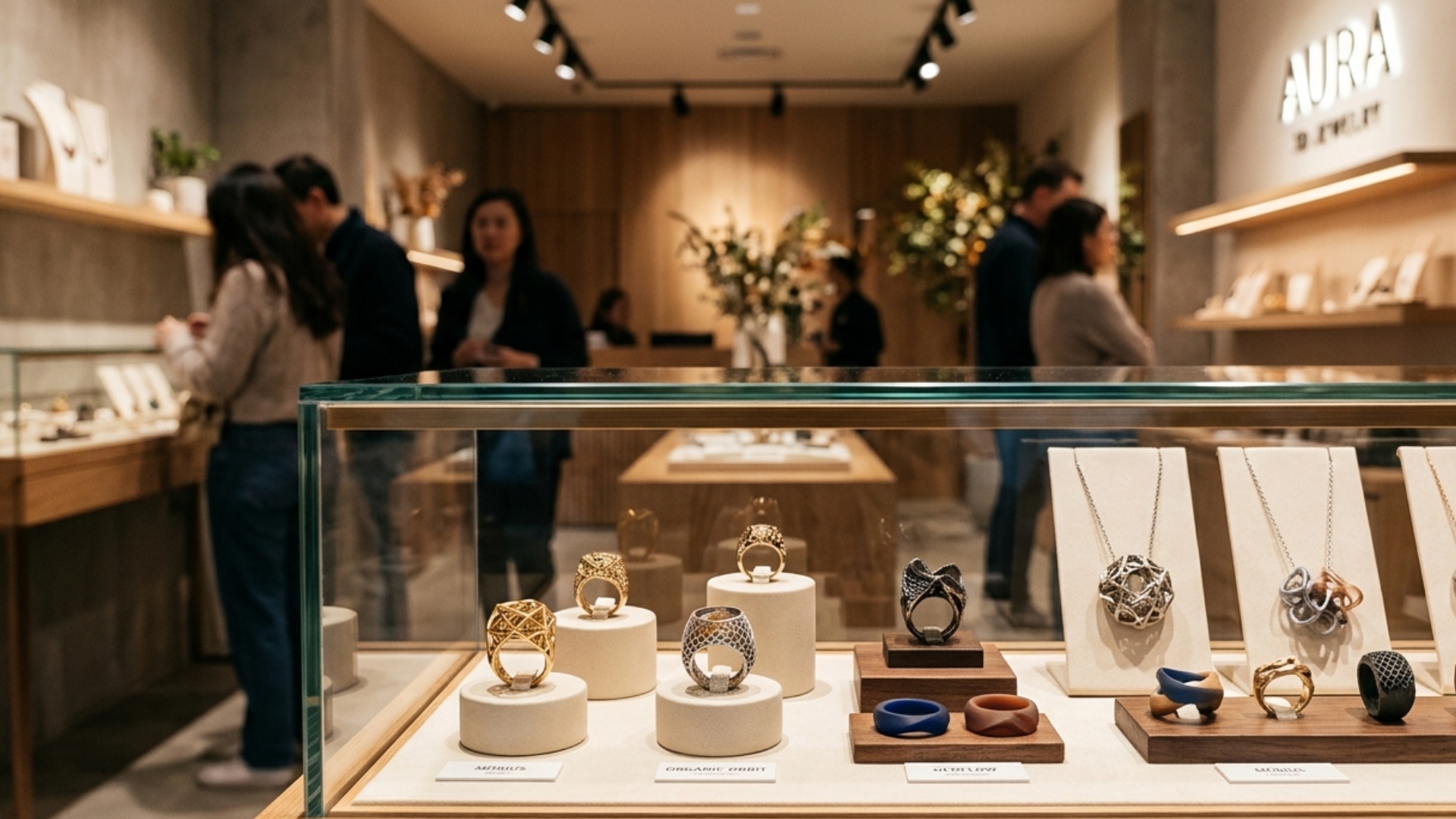
3D printing brings several distinct advantages to 3D Jewelry Printing Service production that differentiate it from conventional techniques:
It allows for deep customization, letting designers craft highly detailed and original pieces that would be difficult or unfeasible with traditional handcrafting. This opens doors to truly individualized creations tailored to specific tastes.
The method supports the production of complex shapes and fine details that are often beyond the reach of manual techniques. This empowers artists to experiment with bold, innovative forms and push the limits of what 3D Printing Metal Jewelry can look like.
Unlike traditional methods that often involve cutting away excess material, 3D printing builds objects layer by layer, using only what’s needed. This precision reduces waste and supports more sustainable manufacturing practices.
Designers can produce prototypes quickly and accurately, allowing for rapid adjustments and refinements. This speeds up development, cuts costs, and improves overall design accuracy.
The technology lowers entry barriers for independent designers and small studios. With relatively affordable equipment and software, more creators can produce limited runs or custom work without large investments in tools or labor.
3D printing gives designers new freedom to explore imaginative concepts. Traditional techniques often limit what can be physically shaped by hand, but digital modeling removes many of those constraints. Artists can now design elaborate patterns, organic forms, and interlocking components with ease. Using specialized software, they turn abstract ideas into tangible models, enabling creations that were once impossible to realize—bridging imagination and execution like never before.
One of the biggest benefits of 3D printing is the ability to personalize jewelry. Customers can collaborate in the design process, specifying preferences such as dimensions, style, gemstone arrangement, or engraving. This collaborative approach results in pieces that reflect personal stories or aesthetics, making each item unique and emotionally meaningful.
Absolutely. Clients play an active role when it comes to 3D-printed jewelry. They can share detailed requests—such as preferred size, shape, stone placement, or material type—and even include personalized elements like names, dates, or symbolic motifs. This direct involvement ensures the final piece aligns closely with their vision, resulting in a one-of-a-kind creation that holds personal significance.
Yes, customers have a range of material choices. Options include precious metals like gold, silver, and platinum, as well as non-precious metals such as brass and bronze. Other materials like resin, ceramics, composites, and specialty metals (e.g., titanium or stainless steel) offer varied textures, colors, and durability. This flexibility allows buyers to match the material not only to their aesthetic preference but also to practical needs like wearability and value.
In the past, creating sample models was time-consuming and costly. Now, 3D printing allows designers to produce accurate mock-ups quickly and affordably. These prototypes help visualize the final product, test fit and form, and make adjustments before casting begins. The result is a smoother workflow, fewer errors, and faster delivery—all contributing to a better experience for the customer.
The integration of 3D printing enhances the customer experience in multiple ways:
Clients can co-create their jewelry, ensuring the final product reflects their exact preferences. This level of input increases emotional connection and satisfaction.
Designers can offer more diverse and intricate styles, catering to a wider range of tastes. This expands choice and helps customers find—or create—pieces that truly resonate.
The ability to refine designs through multiple iterations leads to well-crafted, polished results. This attention to detail ensures the final product meets high standards.
Physical prototypes give customers a realistic preview of the finished piece, helping them make confident decisions and reducing the chance of disappointment.
Faster prototyping and production mean customers receive their custom jewelry more quickly, improving overall service efficiency.
3D printing supports a broad spectrum of materials, encouraging innovation in jewelry design.
Common options include:
Traditional jewelry making often generates significant material waste. In contrast, 3D printing builds items gradually, adding material only where needed. This additive process minimizes excess and supports eco-conscious production. As sustainability becomes more important in fashion and design, this efficient use of resources positions 3D printing as a responsible alternative.
Layer-by-layer fabrication is the core principle behind 3D printing. Here’s how it functions:
Yes, increasingly so. As technology advances, the cost of 3D printers has dropped significantly. Entry-level desktop models are now within reach for independent artisans and small studios. Some suppliers also offer leasing or payment plans, further easing the financial commitment. With growing affordability and user-friendly software, even small-scale jewelers can adopt this tool to enhance creativity and competitiveness.
While 3D printing enables precise and complex designs, it doesn’t replace skilled craftsmanship—it complements it. Many jewelers use 3D printing to create the base structure, then finish the piece by hand. This includes setting stones, polishing surfaces, and adding fine details that require human touch. The combination delivers both innovative design and exceptional quality, preserving the soul of traditional artisanship while embracing modern capabilities.
In conclusion, 3D printing has brought a transformative shift to the jewelry industry. It merges technological innovation with accessible design, expanding creative potential and supporting sustainable practices. By enabling customization, reducing waste, and empowering smaller creators, this technology is making jewelry production more inclusive and forward-thinking. As digital tools and handcraft continue to evolve together, get in touch with us to explore the future of jewelry with us—a fusion of heritage and progress that opens endless possibilities.
