

Discover the Creativity of the Future: Use 3D Printing to Bring Your Ideas to Life
Suite 20-01 & 20-02B, Level 20 The Pinnacle, Persiaran Lagoon, Bandar Sunway, 47500 Subang Jaya, Selangor, Malaysia
hello@custommetal3dprinting.com
+60 124838830
3D Ceramic Printing is becoming a popular choice for customers who need small amounts of ceramic shapes with complex designs, and it delivers excellent results.Using CAD software and special tools, 3D printers can create ceramic shapes with intricate details that would be difficult to achieve through traditional methods. This method is more cost-effective for smaller quantities and allows for easier adjustments and updates to the design over time.Like typical plastic 3D printing for ceramics, there are several methods for printing ceramics. Each method has its own advantages, and selecting the right one should be done carefully based on specific needs.
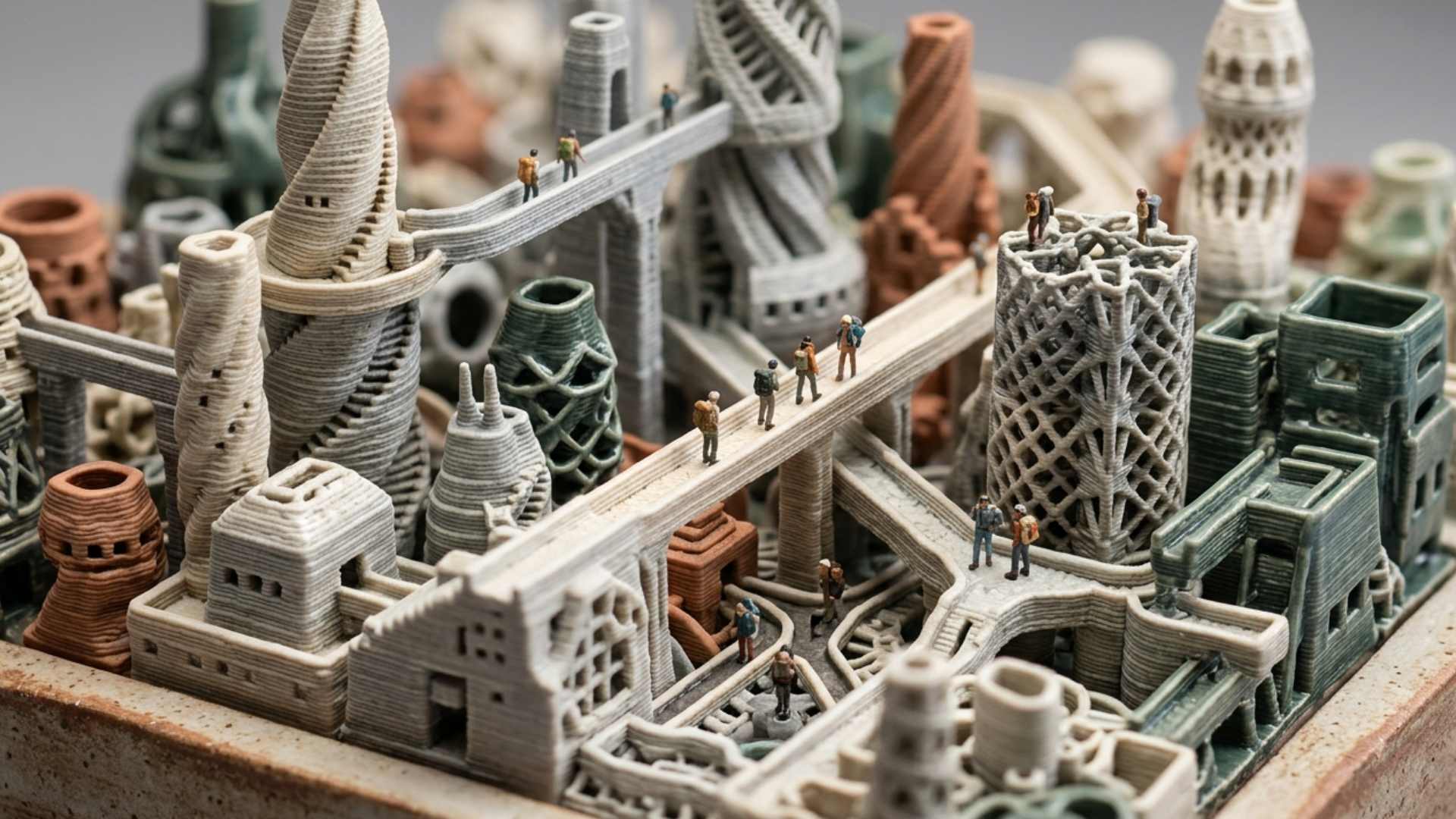
This is the most commonly used form of 3D ceramic printing, although it is usually applied to clay-based ceramics.Ceramic powder is mixed with a binder to create a thick paste. This paste is then pushed through a 3D printer, which can have either a moving base and a fixed nozzle or a fixed base with a moving nozzle. The paste is extruded in a string-like manner, similar to the hand-coiling technique used in traditional pottery. The faster build rate of this method makes it possible to create larger pieces while reducing the chance of deformation.
In the Ceramic 3D Printing Binder Jetting process, a layer of ceramic powder is spread out, and a binding solution is sprayed onto it.Another layer of powder is then added, followed by another layer of binding solution. This process continues layer by layer, gradually forming the final 3D object. Once any excess powder is removed, the piece is fired to complete the production.This method uses a large base, allowing users to produce relatively large ceramic pieces.
In photo polymerization 3D printing, ceramic powder is mixed with a liquid resin.This blend is then hardened layer by layer using either a laser or a digital projector. This method is unique because it can achieve very fine details, as small as less than 100 nanometers, making it ideal for precise and detailed ceramic prints.
Nano-particle jetting is similar to inkjet printing. It involves suspending ceramic nanoparticles in a liquid and spraying them onto a heated base along with a support material. The heat evaporates the liquid, leaving behind the ceramic material, which is then fired and finished.
Laser sintering, also known as selective laser sintering, uses a high-powered laser to fuse ceramic powder into a 3D model.This is done inside a build chamber where the powder bed lowers after each layer is sintered. The surrounding powder acts as support for the structure until it cools and is removed from the chamber.
Unlike 3D printed plastics, 3D printed ceramics need additional steps to be fully prepared for use.One of the first steps is removing excess ceramic powder, which depends on the shape, the amount of powder, and the final product’s requirements.
The process then moves to the de-binding stage, where any organic binders are slowly removed by heating the item to about 500 degrees Celsius in a furnace for 24 to 48 hours.This slow process helps avoid damaging the still fragile item.
After de-binding, the product goes through sintering, where the temperature is raised to around 1200 degrees Celsius or higher.At these high temperatures, parts of the ceramic melt, allowing atoms to move and bring the particles together. This converts the piece from a weak collection of particles into a strong, solid object, often leading to a significant reduction in size.Finally, the piece is cleaned to remove any imperfections.This may include polishing if needed.
Ceramic 3D Printing Services is still an emerging field with ongoing innovations and new applications being explored.If you or your business wants more information on Ceramic Resin 3D Printing please reach out to our team. We are happy to discuss your needs.
