

Discover the Creativity of the Future: Use 3D Printing to Bring Your Ideas to Life
Suite 20-01 & 20-02B, Level 20 The Pinnacle, Persiaran Lagoon, Bandar Sunway, 47500 Subang Jaya, Selangor, Malaysia
hello@custommetal3dprinting.com
+60 124838830
Aluminum 3D printing has revolutionized the way engineers approach lightweight, high-performance components. This technology enables producers to construct components with complicated geometries that would be difficult or impossible to produce using traditional machining methods. From aircraft to automotive and industrial machinery, 3D printed aluminum parts combine strength, durability, and weight reduction in a single solution.
Table of Contents:
The method is especially useful when employing high-strength metals like 7075. 3D printing 7075 aluminum reveals mechanical qualities that match rigorous technical standards, allowing designers to replace several traditional pieces with a single, optimized component. Rapid prototyping, along with functional end-use applications, makes this technology a game-changer in modern product development.
Furthermore, the aluminum additive manufacturing workflow, which includes powder handling, laser fusion, and post-processing, assures production-quality products. The ability to iterate on designs quickly while preserving performance makes 3D printed aluminum a dependable alternative for sectors seeking to innovate more swiftly.
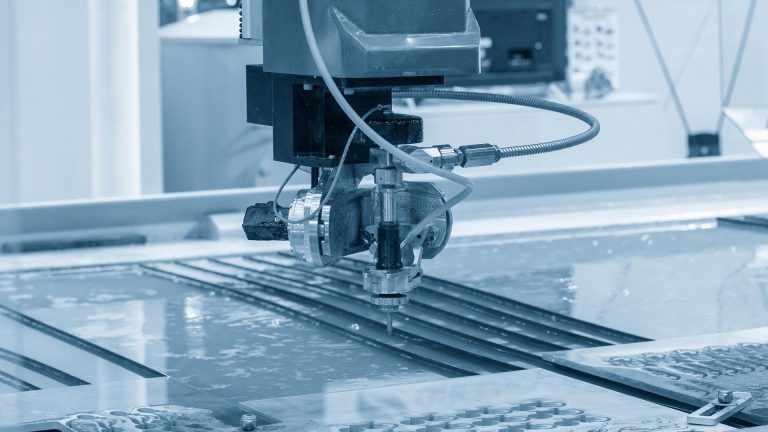
3D printing 7075 aluminum pieces requires precise layer-by-layer fusion of aluminum powder, which is commonly achieved using selective laser melting or other additive processes. Post-processing, such as heat treatment and stress reduction, is essential for maximizing the mechanical potential of this high-performance alloy.
This alloy is valued for its outstanding strength and fatigue resistance, making it suitable for aircraft components, high-stress automotive parts, and industrial tooling. Although more difficult to produce than normal aluminum alloys, 3D printed aluminum from 7075 can achieve performance levels equivalent to traditional production methods when done properly.
Engineers can develop complicated geometries, including lattice structures, internal channels, and optimal weight-reduction features by combining design freedom and controlled processing. These advancements demonstrate why aluminum 3D printing is becoming essential in advanced technical applications.
Aluminum 3D printing gives designers unprecedented latitude in creating lightweight, high-functioning parts. Weight reduction is a significant advantage, especially in the aircraft and automobile industries, where efficiency and fuel savings are crucial. Using additive manufacturing, designers may combine several components into a single, functional assembly without sacrificing strength.
Another advantage is the possibility of creating complex interior structures, channels, and cooling systems. 3D printed aluminum parts can combine numerous functions, decreasing assembly time and improving product performance. Furthermore, rapid prototyping with aluminum enables shorter iteration cycles, reducing time to market for breakthrough goods.
When using high-grade materials like 7075, you get speed, precision, and dependability. 3D printing 7075 aluminum provides both durability and performance, allowing designers to push the boundaries of traditional engineering.
Despite its benefits, 3D printed aluminum presents several obstacles. High-strength alloys, such as 7075, are prone to porosity, cracking, and residual stress if not carefully managed throughout the printing process. To get consistent outcomes, manufacturers must improve laser parameters, building tactics, and powder handling.
Dimensional correctness and post-processing both require care. Stress relief, heat treatment, and surface finishing are critical procedures in ensuring the part fulfills mechanical and aesthetic standards. Aluminum 3D printing is most successful when designers and engineers work together to optimize both design and technique.
Cost issues are also relevant. While additive manufacturing is best suited for intricate or low-volume goods, large-scale production may still prefer older methods. Nonetheless, the capacity to create highly tailored and functionally optimized parts ensures that 3D printed aluminum remains relevant in advanced manufacturing.
Industries throughout the world are using 3D printed aluminum to improve performance and reduce weight. Aerospace equipment, such as brackets, fuel connectors, and heat exchangers, benefits from high-strength metals and complicated designs. 3D printing 7075 aluminum creates components that can bear tremendous stress while being lightweight.
Automotive applications benefit from additive manufacturing, which allows for rapid prototyping and low-volume manufacture of specific parts. Industrial machinery benefits from on-demand production of tooling, fixtures, and replacement parts. Aluminum 3D printing provides new opportunities for inventive designs that were previously unfeasible or prohibitively expensive.
The versatility and performance of additive aluminum parts make them appropriate for end-use production in a variety of industries, demonstrating that 3D printed aluminum is more than just a prototyping tool; it is a full-scale manufacturing solution.
Aluminum 3D printing is transforming how engineers and designers produce lightweight, high-performance components. This technology, which includes 3D printed aluminum and sophisticated alloys such as 7075, combines strength, precision, and flexibility to offer creative solutions across industries. If you’re ready to learn more about how aluminum 3D printing can improve your product design and production, contact us today, and we’ll make your next idea a reality.
