

Discover the Creativity of the Future: Use 3D Printing to Bring Your Ideas to Life
Suite 20-01 & 20-02B, Level 20 The Pinnacle, Persiaran Lagoon, Bandar Sunway, 47500 Subang Jaya, Selangor, Malaysia
hello@custommetal3dprinting.com
+60 124838830
Making metal pieces plays a highly critical role in putting together mechanical assemblies in practically every discipline. It’s vitally important that you put these elements in place so that machines and tools work well. People want them more and more because they find them tough and see that they last a long time.
But how can you shape metal into parts? In this blog post, we’ll speak about three crucial things you should remember while producing custom metal parts: the materials you use, the methods you use to manufacture the parts, and what the parts need to work.
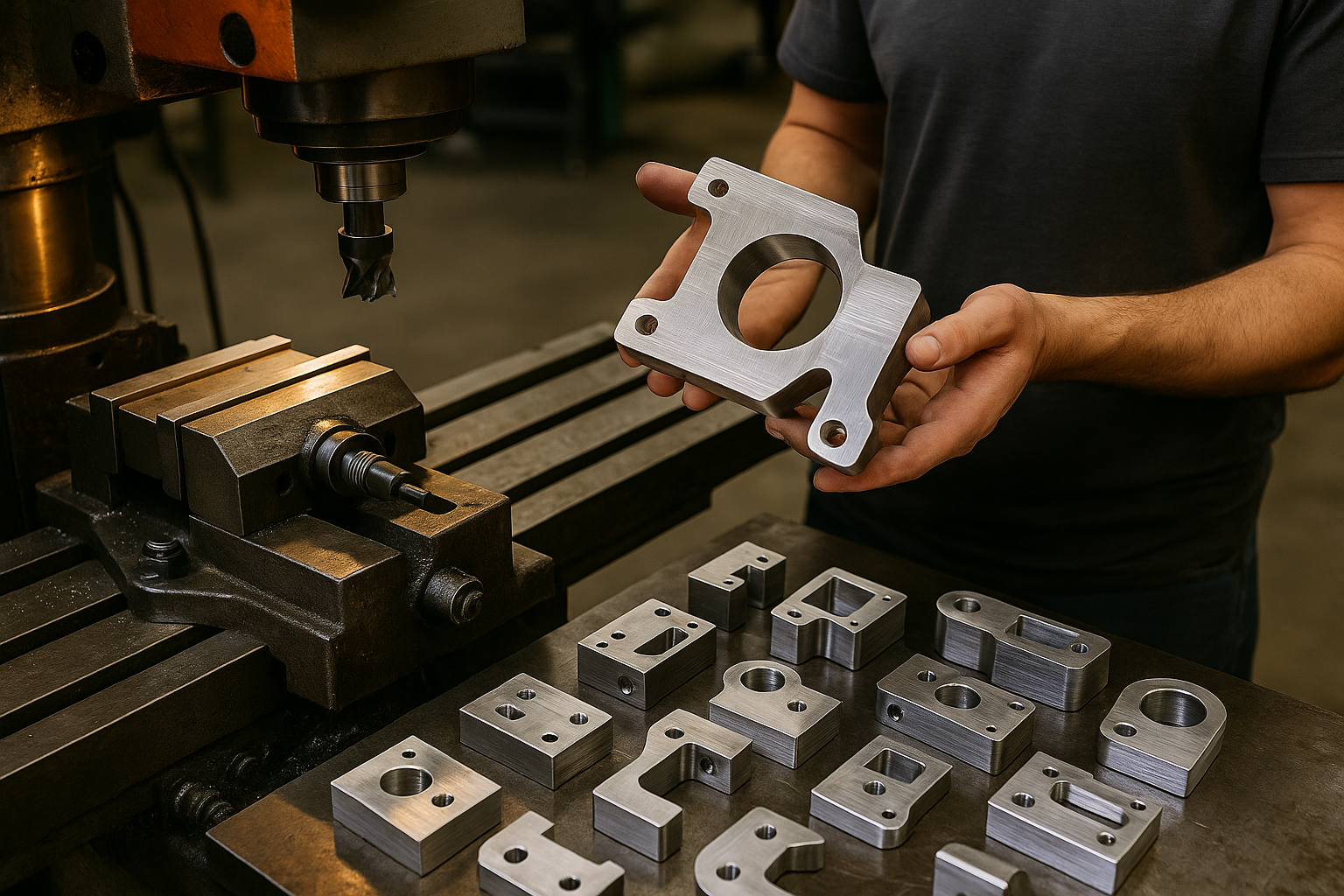
Table of Contents:
The most crucial thing to consider while creating metal pieces is what kind of material you utilise. You can utilise two kinds of metals to produce parts: hard and soft. You should think about the cost, weight, strength, ease of shaping, ease of working with, and corrosion resistance of a metal when you choose it for a part. It’s crucial to consider the benefits and cons of each decision since different materials can vary how well a part performs, how it looks, and how much it costs. When producers choose the proper material, they help ensure that the finished product functions as well as it can and meets all the standards.
People like soft metals because they are light and easy to work with. They find them easier to work with than hard metals and use them to create parts with very tight tolerances and shapes that are hard to produce.
Aluminium is soft when it’s not processed, so it doesn’t work well for machines. That’s why people often mix it with metals like copper, magnesium, and zinc and heat it to make it stronger. People typically utilise aluminium to build things like vehicle and aeroplane parts.
Magnesium costs a little more than aluminium, but it has evident advantages. This material is light, strong, and durable. People typically mix it with zinc and aluminium to manufacture things like cell phone cases and gadgets used around the house.
Brass is an excellent alternative if you need something that won’t rust. It is also quite helpful. Brass is used to make a lot of plumbing elements, such as valves. It may also be incredibly robust and help build things like marine components and coins, depending on how much is utilised.
Copper can be tricky to work with because it is stringy. But copper conducts electricity well, making it a very significant metal for creating electricity. A lot of people use it to make electrical wiring and tubing. It is also widely utilised in many different metal alloys, just as other soft metals.
Hard metals are useful for creating metal parts because they make them stronger and last longer. Hard metals, like their softer counterparts, have their own special qualities and benefits.
Steel is a type of iron that has roughly 1% carbon in it. Steel is not only strong, but also bends easily. You can stamp it, roll it, weld it, and more. Steel is a good material for creating all kinds of metal items.
Stainless steel is the same as normal steel, except it doesn’t rust since it has at least 10% chromium by weight. Many vessels and chemical factories use parts made of stainless steel.
Titanium stands out for its strength. It’s also light, which is why it’s so popular and widely used in the military, aerospace, and medical fields. Another reason why titanium is typically used in marine applications—where metal parts come into contact with water and rain—is its resistance to corrosion.
After you choose the material, the following step is to make the metal portion. There are a lot of things to consider when you choose the best technique to complete the work. The type of part being created can have a huge effect on how it is made. There are numerous ways to make things that can match desired shapes and sizes. Machining, joining, welding, and custom metal parts fabrication are some popular ways to create parts. Manufacturers need to know the good and bad things about each strategy in order to choose the ideal one for their needs.
Here are a few examples. There are hundreds of methods to produce metal parts, and the best way to do it depends on the needs of each part:
There are a lot of distinct kinds of CNC machines. CNC mills and CNC lathes are two of the most frequent types. CNC lathes turn round or bar items, and CNC mills cut things on their own. People generally opt for these machining technologies when they need to create sophisticated metal pieces that have to be exceedingly precise and detailed. Computer software automates much of the work for CNC machines, which can also lower costs.
Die Casting needs a die or mould. It enables the creation of shapes that are really hard to produce and have very small tolerances. There isn’t much machining involved, and the item can be stronger than parts created using other techniques because there aren’t any distinct parts that need to be joined together.
Another approach to produce something that doesn’t need a lot of machining is metal injection moulding. A binder combines with fine metal powder, which is then pressed into a tool cavity. Skipping some steps in the manufacturing process allows you to create a lot of parts quickly and at a lower cost.
A laser cuts or bends tiny sheets of metal to manufacture unique pieces. Sheet metal fabrication can handle intricate jobs just as effectively as CNC machining but takes less time to set up. This is because the metal can be moulded into nearly any shape.
To mould sheet metal into the desired shape, metal stamping uses dies and stamping machines. Punching and blanking are two more common ways to form metal. There are many methods to employ stamping, but it works best for designs or markings that are three-dimensional.
It’s not always straightforward to make metal parts. Some parts are tougher to create than others. You can make simple parts with ordinary equipment and machines in a regular machine shop. But to make unique parts that match specific needs, you might need more complex machines and more skilled staff. Custom parts may require more than just the basics—they might also need things like heat treatment and surface finishing after production.
It’s best to work with a custom metal parts supplier who understands how to create intricate parts if a component requires rigorous geometric tolerances, strict quality standards, big overall dimensions, or tight process control. Metal fabricators have the skills and tools to create parts exactly how you want them, no matter how complex they are.
Making pieces out of metal is a lot of work and requires attention to many different factors. Whether you’re working with a custom metal parts factory or handling it in-house, every decision—from material choice to production method—affects the final product. Custom Metal 3D is the best place to go if you need to create custom metal parts manufacturing solutions rapidly and reliably. Our team of professionals will help you every step of the way, from choosing the proper material for your part to creating it. This makes the hard process of making metal parts easy.
Custom Metal 3D Printing can help you get the best results, whether you need parts for the medical or aerospace industries or just conventional parts that must fulfil high criteria, like tight quality standards and difficult geometric tolerances. Get in touch with us today to get started!
